


Adjustable Sample Coffee Roaster by Coffee Pro Direct
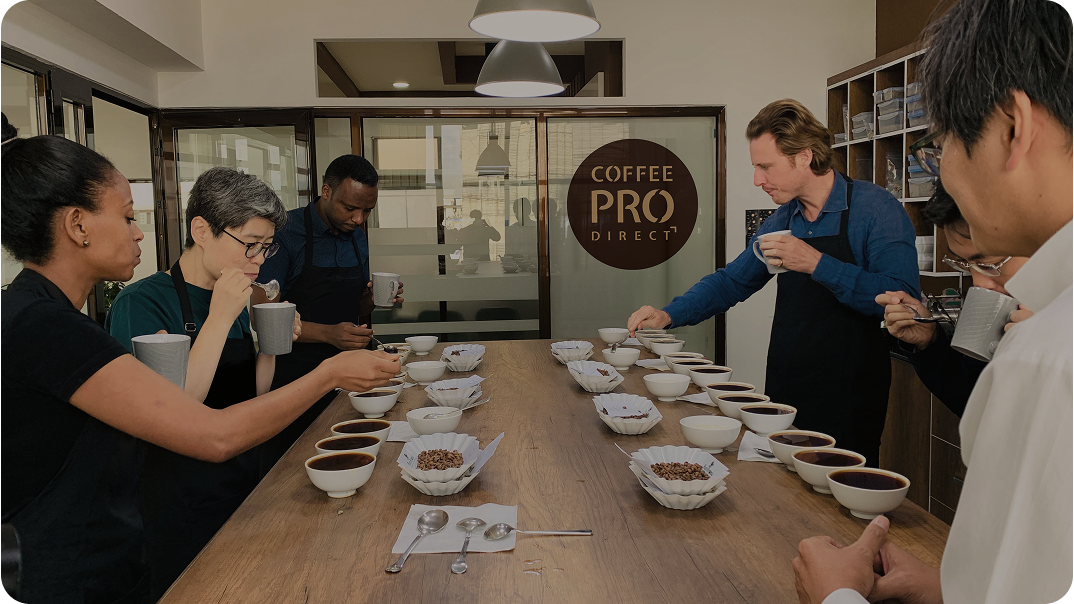
Introduction to Adjustable Sample Roasting
Sample roasting is a critical stage between green coffee inspection and commercial production. Before committing a large quantity of beans to a production roaster, coffee professionals need to understand how a particular lot responds to heat and how its characteristics appear in the cup. An adjustable sample coffee roaster gives buyers, producers, exporters, laboratories, and roasters greater control over small-batch roasting conditions. In Vietnam, where both Robusta and Arabica coffees are evaluated for domestic and international markets, controlled sample roasting can support better sourcing, quality control, product development, and roast-profile decisions. Coffee Pro Direct provides professional coffee equipment for sample roasting, laboratory analysis, cupping, and commercial roasting workflows.
What Is an Adjustable Sample Coffee Roaster?
An adjustable sample coffee roaster is a compact roasting machine designed to roast relatively small quantities of green coffee while allowing the operator to modify important roasting variables. Depending on the machine, adjustable controls may include heat input, airflow, roast duration, drum or circulation speed, and cooling functions. These controls allow coffee professionals to test different roasting approaches without using large quantities of valuable green coffee. Unlike a production roaster, the primary purpose of a sample machine is evaluation, comparison, experimentation, and quality control rather than high-volume output.
Why Sample Roasting Is Important
Green coffee can have very different characteristics after roasting. Physical appearance, moisture, density, screen size, and defects provide valuable information, but they cannot completely reveal the sensory potential of a coffee. Sample roasting transforms a small quantity of green beans into a form that can be ground and evaluated. The Specialty Coffee Association's current sample-preparation standard describes roasting as part of preparing green coffee for sensory assessment, while also emphasizing that the standard is intended primarily for green Arabica and can be adapted to other coffee states and species.
An adjustable sample coffee roaster therefore becomes an important bridge between green coffee analysis and sensory evaluation. It allows a coffee business to examine a lot before making larger roasting or purchasing decisions.
Understanding Adjustable Roasting Controls
The main advantage of an adjustable sample coffee roaster is the ability to control roasting conditions rather than simply turning a machine on and waiting for a fixed result. Different green coffees may require different approaches because bean structure, moisture, density, processing, and physical condition can vary.
Adjustable heat allows the operator to influence the rate of temperature development. Airflow can affect heat transfer and smoke removal. Roast duration can be monitored and documented. Some machines may provide additional control over drum or air movement. These variables can help professionals establish a repeatable house procedure for sample evaluation.
Heat Control and Roast Development
Heat application is central to roast development. Too much energy at the wrong stage can produce undesirable surface effects or excessive roast characteristics, while insufficient energy may leave a coffee inadequately developed. An adjustable sample coffee roaster gives the operator greater flexibility to manage heat input throughout the roast.
The objective is not necessarily to create the most complex roast profile possible. For evaluation roasting, consistency is often more important than experimentation. A recent buyer-focused sample-roasting guide emphasizes that a sample roast should function as a controlled measuring process and that operators should use a repeatable protocol rather than changing conditions arbitrarily between samples.
Airflow Adjustment
Airflow can influence the roasting environment by helping move heat and remove smoke and chaff. Adjustable airflow is especially useful when professionals want to reproduce a specific evaluation procedure across multiple coffees.
An adjustable sample coffee roaster with appropriate airflow control can provide greater flexibility when evaluating coffees with different physical characteristics. Vietnamese coffee laboratories can document airflow settings alongside batch size, temperature observations, roast time, and sensory results. This creates a stronger record for future comparisons.
Roast Time and Repeatability
Roast time is another important parameter. Recording how long a sample takes to reach its intended endpoint allows operators to compare batches and identify significant differences. However, roast time should not be considered in isolation because different machines and batch sizes transfer heat differently.
A useful adjustable sample coffee roaster should support repeatable conditions within the machine itself. Industry guidance also cautions that a sample-roasting profile cannot simply be copied numerically onto a larger production roaster because machine size, heat transfer, and batch size change the roasting behavior.
Sample Roasting Versus Production Roasting
Sample roasting and production roasting have different objectives. Production roasting is designed to create a commercial product efficiently and consistently at scale. Sample roasting is primarily designed to reveal and compare green coffee characteristics.
An adjustable sample coffee roaster helps professionals evaluate the coffee before deciding how it should be roasted commercially. A successful sample profile can provide useful direction, but the exact temperature curve normally needs to be translated and adapted for the production machine. This distinction prevents roasters from assuming that a small sample profile can simply be copied into a larger machine without adjustment.
Evaluating Green Coffee Before Roasting
Sample roasting should normally be part of a larger green coffee evaluation process. Before roasting, professionals may inspect the coffee for visible defects, bean size, uniformity, foreign material, moisture, and other physical characteristics.
A suitable adjustable sample coffee roaster can then be used after the sample has been properly identified, weighed, and prepared. This creates a workflow where physical data and sensory data can be compared. Vietnamese producers, exporters, and buyers can use this approach to assess Robusta and Arabica lots more comprehensively.
Importance of Representative Samples
A small roast is only useful if the sample represents the larger coffee lot. If the sample contains an unusual concentration of defective, oversized, undersized, or otherwise atypical beans, the resulting roast may not accurately represent the commercial coffee.
An adjustable sample coffee roaster cannot correct a poorly selected sample. Professional laboratories should therefore use appropriate sampling and dividing procedures before roasting. A representative sample allows the roasting result and subsequent sensory evaluation to provide more meaningful information about the larger lot.
Sample Roasting for Coffee Buyers
Coffee buyers often receive samples from several suppliers and origins. They need an efficient way to compare potential coffees without roasting full commercial batches. An adjustable sample coffee roaster allows buyers to evaluate small quantities while maintaining control over roasting conditions.
Vietnamese coffee buyers can use sample roasting to compare Robusta from different growing areas, processing methods, suppliers, or preparation standards. Arabica buyers can similarly evaluate differences between origins, varieties, processing methods, and harvest lots. The resulting sensory information can support purchasing decisions alongside price, physical specifications, and availability.
Sample Roasting for Coffee Producers
Producers can also benefit from controlled sample roasting. A producer may want to compare different harvesting stages, drying methods, fermentation approaches, or processing experiments. Roasting these samples under consistent conditions can reveal whether a processing change has influenced cup characteristics.
An adjustable sample coffee roaster makes side-by-side comparisons more practical. Vietnamese producers can use sample roasting as part of quality improvement programs, helping connect post-harvest decisions with sensory outcomes. This can be particularly valuable when producers are developing differentiated specialty Robusta or Arabica offerings.
Sample Roasting for Coffee Exporters
Exporters need to understand the coffees they offer to customers. A consistent sample-roasting system allows them to evaluate incoming lots and prepare reliable samples for buyers.
An adjustable sample coffee roaster can support exporter quality-control procedures by allowing small samples to be roasted under documented conditions. Vietnamese exporters can maintain records that connect each roast with a supplier, lot, processing method, origin, moisture result, physical inspection, and cupping evaluation. This improves traceability and makes quality discussions with customers more structured.
Sample Roasting for Coffee Roasters
Roasters are among the most frequent users of sample roasting equipment. Before purchasing green coffee, they need to understand whether a lot fits their product range and how it responds to roasting.
An adjustable sample coffee roaster allows roasters to test different approaches without consuming large quantities of green coffee. They can evaluate light, medium, or darker approaches when appropriate, compare different development strategies, and identify the roast direction that best expresses the coffee.
Sample roasting can therefore reduce the uncertainty associated with introducing a new green coffee into a commercial roasting program.
Sample Roasting Vietnamese Robusta
Vietnam's strong Robusta production makes controlled sample evaluation particularly valuable. Robusta coffees can differ significantly according to farm location, variety, harvesting, drying, processing, and storage.
An adjustable sample coffee roaster allows Vietnamese coffee professionals to examine these differences under controlled conditions. A producer may compare natural and washed coffees, while an exporter may evaluate different preparation lots. Roasters can assess whether a Robusta is suitable for espresso, traditional Vietnamese brewing, blends, specialty applications, or other products.
Professional sensory evaluation is especially useful because Robusta can show distinctive characteristics that require appropriate roasting and tasting approaches.
Sample Roasting Vietnamese Arabica
Vietnamese Arabica coffees can also benefit from detailed sample evaluation. Differences in elevation, variety, climate, processing, and drying can produce diverse sensory profiles.
An adjustable sample coffee roaster allows specialty roasters to compare these coffees before commercial production. Sample roasting can help identify desirable acidity, sweetness, body, aroma, and flavor characteristics and determine which roast direction best supports the coffee.
For Vietnamese specialty businesses, this creates opportunities to develop differentiated products based on specific regional and processing characteristics.
Developing Repeatable Sample Roast Profiles
Repeatability is more valuable than creating a complicated profile that cannot be reproduced. A laboratory or roasting team should establish a baseline process covering sample quantity, starting conditions, heat application, airflow, endpoint, cooling, and documentation.
An adjustable sample coffee roaster makes these parameters easier to control. Operators can record each roast in a log and compare successful and unsuccessful batches. Over time, the business can establish reference profiles for different evaluation purposes while still recognizing that different coffees may require careful interpretation.
Why Documentation Matters
A sample roast should produce more than a bag of roasted beans. It should produce information that can be reviewed later. Useful records may include sample identification, green coffee origin, supplier, lot number, processing method, sample weight, machine settings, roast time, endpoint, roast color, cooling conditions, and cupping observations.
An adjustable sample coffee roaster becomes significantly more valuable when paired with systematic documentation. Vietnamese laboratories and roasters can use digital or paper roast logs to connect physical green coffee information with roasting and sensory results.
Sample Roasting and Cupping
Roasting is only one stage of the evaluation process. After roasting, samples can be rested and prepared for sensory evaluation according to the chosen methodology.
The SCA's current sample-preparation standard describes green coffee preparation for sensory assessment and covers the mechanics of roasting, grinding, brewing, and tasting. A recent professional cupping guide also emphasizes consistent sample roasting and controlled resting before evaluation.
An adjustable sample coffee roaster therefore works best as part of a complete workflow that includes sample preparation, grinding, cupping, and documentation.
Evaluating Roast Color
Roast color can provide an additional reference when comparing samples. Color measurements may help identify whether batches have been roasted within an intended range. However, color should not be treated as the only indicator of quality because two coffees can have similar color measurements but different sensory characteristics.
An adjustable sample coffee roaster can support consistent roast-color targets when the operator has appropriate measurement equipment. Vietnamese laboratories can combine color information with roast time, temperature records, green coffee measurements, and cupping results.
Cooling After Sample Roasting
Cooling is an important part of sample roasting because beans continue to change while they remain hot. Fast and controlled cooling helps stop the roast at the intended endpoint and improves consistency between samples.
An adjustable sample coffee roaster should therefore have an appropriate cooling arrangement for its intended application. Historical SCA training requirements for sample roasters have emphasized fast bean dumping and cooling for drum systems and cooling capability for fluid-bed systems.
Vietnamese roasting laboratories should keep cooling equipment clean and ensure that the cooling stage does not become a production bottleneck.
Preventing Sample Contamination
Clean equipment is essential when evaluating multiple coffees. Coffee particles, chaff, oils, and residues from previous batches can potentially affect subsequent samples.
An adjustable sample coffee roaster should be cleaned according to its operating requirements, with particular attention to areas where coffee residue and chaff can accumulate. Grinders, trays, sample containers, and cupping equipment should also be maintained carefully. Vietnamese laboratories can establish cleaning schedules based on sample volume and the sensitivity of their evaluation program.
Safety and Ventilation
Sample roasting creates heat, smoke, chaff, and exhaust, even though the batches are relatively small. The roasting area should therefore have suitable ventilation and follow manufacturer safety requirements.
Historical SCA training requirements specifically identified appropriate ventilation when a sample roaster is located near a cupping area. An adjustable sample coffee roaster should be installed and operated according to its manufacturer's instructions and applicable local requirements.
Vietnamese businesses should also provide appropriate staff training and keep the surrounding work area clean and unobstructed.
Choosing a Sample Roaster for a Coffee Laboratory
A laboratory should select an adjustable sample coffee roaster according to its testing requirements rather than focusing on capacity alone. Important considerations include:
- Suitable sample batch size
- Heat-control flexibility
- Airflow adjustment
- Temperature monitoring
- Repeatability
- Cooling performance
- Ease of cleaning
- Data recording capability
- Maintenance requirements
- Available workspace
- Operator training requirements
- Compatibility with the laboratory's existing workflow
The machine should support the laboratory's evaluation methodology and allow operators to reproduce approved procedures consistently.
Choosing Equipment for a Commercial Roasting Business
A commercial roaster may need sample equipment for green coffee purchasing, quality control, new product development, and roast-profile testing. An adjustable sample coffee roaster can reduce the amount of green coffee needed for experimentation and help teams make decisions before moving to production.
Vietnamese roasting companies should consider how frequently they receive new samples and how many coffees they evaluate each week. Businesses handling many supplier samples may benefit from a dedicated sample-roasting station rather than sharing equipment with production.
Integrating a Sample Roaster Into a Coffee Lab
A sample roaster works best when integrated into a complete laboratory workflow. Green coffee can move from receiving and identification to sample division, physical inspection, moisture measurement, sample roasting, cooling, grinding, cupping, and documentation.
An adjustable sample coffee roaster can serve as the central transition point between green coffee analysis and sensory evaluation. Coffee Pro Direct offers equipment designed to support these connected workflows, allowing coffee businesses to develop laboratory and roasting systems around their specific requirements.
Benefits of Adjustable Sample Roasting
The primary advantage of an adjustable sample coffee roaster is control. It allows coffee professionals to make controlled changes while working with small quantities of green coffee.
Other benefits include:
- More consistent sample evaluation
- Reduced green coffee consumption during testing
- Easier roast-profile experimentation
- Better supplier comparison
- More efficient product development
- Improved quality-control procedures
- Greater traceability
- Faster evaluation of new coffee lots
- Better communication between buyers and roasters
- More informed commercial roasting decisions
These advantages make adjustable sample roasting valuable across the coffee supply chain.
Common Mistakes in Sample Roasting
One common mistake is changing too many variables at the same time. If heat, airflow, batch size, and roast endpoint all change simultaneously, it becomes difficult to determine why the cup changed.
Another mistake is treating the sample roast as a miniature version of the production roast. Sample and production machines have different thermal characteristics, so a numerical profile cannot necessarily be transferred directly.
A further mistake is judging the coffee before confirming that the sample roast itself was successful. A roast affected by scorching, tipping, uneven development, or an incorrect endpoint may give misleading sensory results.
Building a Professional Sample Roasting Workflow
A professional workflow can begin with representative sampling and clear identification. The sample is then weighed, inspected, and prepared for roasting. The adjustable sample coffee roaster is operated using a documented baseline profile. After roasting, the sample is cooled quickly, labeled, stored appropriately, and prepared for sensory evaluation.
The results can then be compared with physical green coffee data and previous samples. This process creates a repeatable chain from green coffee to final sensory decision.
Why Choose Coffee Pro Direct?
Coffee Pro Direct provides professional coffee equipment for sample roasting, green coffee analysis, laboratory preparation, cupping, weighing, grinding, and commercial roasting. An adjustable sample coffee roaster can become an important part of a professional quality-control workflow, helping businesses evaluate coffees before committing them to larger production batches.
For Vietnamese producers, exporters, laboratories, buyers, cafés, and roasters, the right sample-roasting equipment can support more structured evaluation of local Robusta and Arabica. Professional equipment can also help businesses create repeatable procedures as their sample volume and product range grow.
Conclusion
An adjustable sample coffee roaster provides coffee professionals with a practical way to evaluate green coffee under controlled roasting conditions. Its value comes not simply from the ability to roast small quantities, but from the ability to create repeatable and documented conditions for meaningful comparison Businesses should also remember that a sample-roasting profile cannot simply be copied onto a larger production machine. Differences in batch size, heat transfer, airflow, and machine design mean that production profiles normally need to be developed from the information gained during sample evaluation. With appropriate equipment, trained operators, standardized procedures, and careful sensory evaluation, sample roasting can become a powerful quality-control and product-development tool. Coffee Pro Direct helps coffee businesses build professional workflows with equipment for sample roasting, laboratory analysis, coffee preparation, cupping, and commercial roasting.
FAQs
What is an adjustable sample coffee roaster?
An adjustable sample coffee roaster is a small-batch roasting machine that allows operators to control selected roasting variables such as heat, airflow, time, and other machine-specific settings.
Why use a sample roaster instead of a production roaster?
Sample roasters allow professionals to evaluate small quantities of green coffee without using large quantities of beans or interrupting commercial production.
Who uses adjustable sample coffee roasters?
Coffee producers, exporters, green coffee buyers, laboratories, specialty roasters, quality-control teams, and coffee researchers can all use sample roasting equipment.
Can an adjustable sample roaster be used for Robusta?
Yes. It can be used to evaluate Robusta samples, including Vietnamese Robusta, provided the roasting and sensory evaluation procedures are appropriate for the coffee being assessed.
Can it roast Arabica samples?
Yes. Sample roasters are commonly used to prepare green Arabica for sensory evaluation, and the SCA's current sample-preparation standard specifically addresses green Arabica while allowing adaptation to other coffee species.
Why is adjustable heat important?
Adjustable heat gives the operator greater control over the rate and development of the roast and helps establish repeatable evaluation conditions.
Is airflow control useful?
Yes. Airflow can influence heat transfer and smoke removal, making it a useful variable when developing controlled sample-roasting procedures.
Can a sample roast profile be copied directly to a production roaster?
Not necessarily. Sample and production roasters differ in thermal behavior, airflow, batch size, and heat transfer. Sample roasting should guide production development rather than be copied exactly.
Κατηγορίες
Διαβάζω περισσότερα
The Essential Guide to Horological Care in the Local Environment A fine wristwatch is far more than a simple tool for tracking hours; it is an extension of your personality, a reflection of your taste, and an investment that can last for generations. However, maintaining the pristine look of a luxury or casual timepiece requires consistent care, especially when navigating the unique...

🌐 CLICK HERE 🟢==►► WATCH NOW🔴 CLICK HERE 🌐==►► Download Nowhttps://iyxwfree24.my.id/watch-streaming/?video=can-cash-app-users-receive-2500-from-15-m-settlement-before-the-deadlineBacon ipsum dolor amet turkey kielbasa jowl t-bone, prosciutto boudin spare ribs chuck fatback pastrami alcatra venison picanha salami pig. Rump chicken frankfurter landjaeger, t-bone kielbasa jowl tenderloin biltong...

According to recent market analysis from Intel Market Research, Global Fuel Consumption Measurement System market was valued at USD 760 million in 1016, with projections indicating growth to USD 1,097 million by 2034, expanding at a steady CAGR of 5.6% during the forecast period (2026-2034). This market evolution reflects tightening environmental regulations worldwide and the growing emphasis...

Choosing the right Shopify theme can directly affect how visitors interact with your online store. A visually attractive design can bring your products to life, but a conversion-focused theme goes further by simplifying navigation, building trust, highlighting products, and guiding shoppers to checkout. With hundreds of Shopify themes available, finding the best Shopify themes for conversion...

🔴📺📱👉 CONTINUE WATCHING...https://iyxwfree24.my.id/watch-streaming/?video=complete-travel-infohow-do-i-really-get-through-to-qatar&source=webExploring the Buzz: {Complete Travel Info™}}How do I really get through to QatarEven more niche genres, like vaporwave (a genre inspired by 80s and 90s pop culture), have entire internet communities dedicated to creating, sharing, {Complete Travel...
