


How to Achieve DOSH Compliance with Safety Consulting in Malaysia
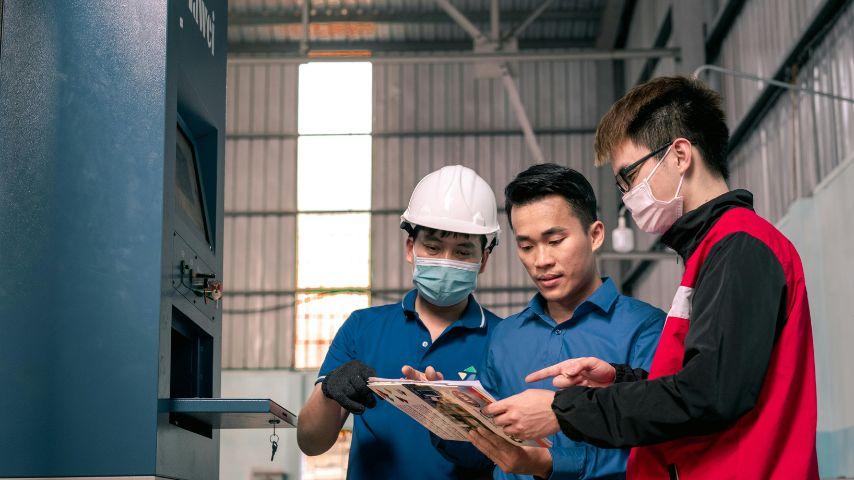
Malaysian businesses face a rapidly shifting regulatory landscape following the enforcement of the Occupational Safety and Health (Amendment) Act 2022 in June 2024. With maximum fines increasing to RM500,000 and the mandate for Occupational Safety and Health (OSH) Coordinators, companies must adapt quickly to avoid severe financial and legal penalties. This guide details how partnering with a safety consulting firm in Malaysia helps organizations navigate Department of Occupational Safety and Health (DOSH) compliance, reduce operational risks, and protect their workforce from rising occupational hazards.
Comprehensive safety consulting in Malaysia provides specialized expertise to help companies comply with the Occupational Safety and Health (Amendment) Act 2022, implement mandatory risk assessments, and reduce workplace injuries through targeted operational safety strategies.
Why is workplace safety a growing concern in Malaysia?
Workplace safety is a growing concern in Malaysia because the national rate of occupational injuries is rising across almost all industries. According to the Department of Statistics Malaysia (DOSM) 2023 report released in November 2024, the country recorded a 13.8% increase in occupational injury cases, reaching a total of 38,950 incidents compared to 34,216 in 2022.
The DOSM data reveals that the national occupational injury rate increased from 2.26 to 2.46 per 1,000 workers. Furthermore, fatal occupational injuries rose to 324 cases. A deeper analysis of these statistics highlights specific operational risks that safety consulting firms aim to mitigate:
· Demographics: Male workers account for 83.7% of all occupational injuries. Workers aged 60 to 64 recorded the highest injury rate at 2.71 per 1,000 workers.
· Injury Causes: The working environment caused 20,558 injuries, while transport and lifting equipment caused 7,350 incidents. Falls accounted for 9,147 injuries and 95 deaths, making falls the deadliest hazard in Malaysian workplaces.
· Occupational Diseases: Repeated exposure to hazardous conditions resulted in 8,155 cases of occupational diseases. An overwhelming 82.8% of these cases (6,754 incidents) were occupational noise-related hearing disorders.
These statistics underscore the vital role of operational safety risk reduction. Employers can no longer rely on basic safety training; companies must implement comprehensive hazard identification and risk assessment strategies to protect their employees.
What are the new requirements under the Malaysia OSHA (Amendment) Act 2022?
The Occupational Safety and Health (Amendment) Act 2022 introduces expanded coverage, stricter duties for principals, the mandatory appointment of OSH Coordinators, and significantly higher penalties for non-compliance. Enforced on June 1, 2024, the Amendment Act forces Malaysian employers to elevate their safety standards to meet new legal benchmarks.
Below is a detailed breakdown of the key regulatory changes impacting Malaysian businesses:
Expansion of Scope and Applicability
The original Occupational Safety and Health Act 1994 only applied to specific industries such as manufacturing, construction, and mining. The Amendment Act expands this jurisdiction to cover all places of work throughout Malaysia, including public services and statutory authorities.
Duties of Principals
The Amendment Act introduces a corresponding duty for "principals"—defined as persons who contract with a contractor for work execution. A principal must now ensure the safety and health of any contractor, subcontractor, or employee working under the principal's direction. The principal must provide safe working environments, maintain plant systems, and supply necessary supervision.
Mandatory Risk Assessments and Emergency Procedures
Employers, self-employed persons, and principals must conduct formal risk assessments to identify safety and health risks posed to any person affected by the company's operations. Businesses must also develop and implement explicit procedures to address emergencies.
Appointment of an OSH Coordinator
Employers with five or more employees who do not already require a dedicated Safety and Health Officer must appoint an Occupational Safety and Health Coordinator. The OSH Coordinator coordinates occupational safety issues within the workplace. Failure to appoint an OSH Coordinator carries a fine of up to RM50,000, six months imprisonment, or both.
Employee Rights to Remove Themselves from Danger
Employees now hold the statutory right to remove themselves from imminent danger at the workplace. If an employee informs the employer of a reasonable belief regarding imminent danger and the employer fails to act, the employee can stop working. The Amendment Act protects these employees from discrimination or undue consequences.
Comparison of Malaysia OSHA 1994 vs. OSHA (Amendment) Act 2022
|
Feature |
OSHA 1994 |
OSHA (Amendment) Act 2022 |
|
Applicability |
Specific industries only (e.g., manufacturing, construction) |
All places of work, including public services |
|
Maximum Fine (Employers) |
RM50,000 |
RM500,000 |
|
Maximum Fine (Suppliers/Designers) |
RM20,000 |
RM200,000 |
|
OSH Coordinator Requirement |
Not mandated |
Mandatory for companies with 5+ employees |
|
Director Liability |
Standard corporate liability |
Directors and office bearers are jointly and severally liable |
|
Employee Rights |
General protections |
Explicit right to remove themselves from imminent danger |
Which industries in Malaysia face the highest risk of occupational hazards?
The services, manufacturing, and construction sectors face the highest risk of occupational hazards in Malaysia, accounting for the vast majority of workplace injuries and fatalities. Safety consulting firms specifically target these high-risk sectors to implement stringent operational safety measures.
According to the DOSM 2023 statistics:
· Services Sector: This sector recorded the highest volume of non-fatal incidents, totaling 10,608 occupational injuries and 44 fatalities.
· Manufacturing Sector: Manufacturing plants recorded 10,335 injuries and 66 fatal occupational injuries. The heavy reliance on machinery, chemical handling, and confined spaces drives the high injury rate in this sector.
· Construction Sector: While the construction sector recorded fewer total injuries (5,379 cases), the construction industry is the deadliest sector in Malaysia. Construction sites accounted for 88 fatal occupational injuries, driven by risks related to falls from height, scaffolding failures, and heavy machinery accidents.
How do safety consultants help Malaysian businesses reduce operational risks?
Safety consultants help Malaysian businesses reduce operational risks by conducting specialized audits, deploying advanced risk assessment methodologies, and delivering certified training programs that ensure alignment with DOSH standards.
Safety consulting firms bring objective, third-party expertise to identify blind spots that internal teams frequently miss. A professional safety consultant executes several critical functions for Malaysian businesses:
Executing Comprehensive Risk Assessments
Safety consultants perform highly technical evaluations required by DOSH. These include Chemical Health Risk Assessments (CHRA) to evaluate employee exposure to hazardous substances, Noise Risk Assessments (NRA) to combat the high rate of occupational hearing loss, and Ergonomic Risk Assessments (ERA) to prevent musculoskeletal disorders.
Implementing Risk Mitigation Frameworks
Once a safety consultant identifies a hazard, the consultant designs a mitigation framework. This involves establishing Local Exhaust Ventilation (LEV) systems, designing customized Standard Operating Procedures (SOPs), and selecting the appropriate Personal Protective Equipment (PPE) for the specific working environment.
Facilitating HRDF-Claimable Training
Consultants organize and deliver targeted training sessions to educate employees on safety protocols. Popular training modules include Chemical Handling, Emergency Response Team (ERT) readiness, and specialized certification courses for newly appointed OSH Coordinators.
Managing DOSH Documentation and Reporting
Safety consulting teams handle the complex paperwork associated with DOSH compliance. The consultants maintain up-to-date safety documentation, manage machinery registration (such as Unfired Pressure Vessels), and file accident investigation reports to prevent recurring incidents.
When should a company hire an external safety consultant versus building an internal team?
The decision to hire an external safety consultant or build an internal safety team depends on the organization's size, budget, and risk profile.
Choose an external safety consulting firm if your business has fewer than 50 employees, operates in a lower-risk sector (like retail or general services), and needs to quickly comply with the OSH Coordinator mandate without the overhead of a full-time hire. External consultants provide cost-effective access to expert knowledge on a project-by-project basis.
Choose an internal safety team if your organization operates a large-scale manufacturing plant, oil and gas facility, or major construction site. High-risk operations require full-time Safety and Health Officers on-site daily to manage continuous hazard exposure, monitor dynamic work environments, and supervise large contractor workforces.
What steps must Malaysian employers take to ensure DOSH compliance?
Malaysian employers must take a structured, continuous approach to hazard management, documentation, and employee training to ensure DOSH compliance. Following the enforcement of the OSHA (Amendment) Act 2022, businesses must prioritize the following steps:
1. Appoint a designated safety representative: Employers with five or more staff members must immediately assign an OSH Coordinator. Large industrial facilities must hire certified Safety and Health Officers.
2. Conduct a baseline compliance audit: Review all existing safety policies, emergency procedures, and equipment maintenance logs against the new Amendment Act requirements. Identify any gaps in contractor management or principal duties.
3. Perform targeted risk assessments: Engage a registered safety consultant to conduct a Hazard Identification, Risk Assessment, and Risk Control (HIRARC) evaluation. Schedule specialized assessments like the CHRA and NRA based on the specific hazards present in your facility.
4. Implement corrective actions: Address the risks identified in the HIRARC report. Install safety guards on machinery, improve workplace ventilation, and secure high-risk zones to prevent falls.
5. Establish a continuous training schedule: Train all employees on the updated safety procedures. Ensure workers understand their legal right to remove themselves from imminent danger and how to report hazards to the OSH Coordinator.
6. Schedule periodic field inspections: Perform routine workplace walkthroughs to verify that employees follow safety protocols and that personal protective equipment remains in good condition.
Next steps for improving operational safety
Protecting your workforce and maintaining DOSH compliance requires proactive planning and expert execution. The ten-fold increase in penalties under the OSHA (Amendment) Act 2022 means Malaysian businesses cannot afford to view safety as an afterthought.
To secure your operations, start by auditing your current safety documentation and determining if your business meets the new OSH Coordinator threshold. Partnering with a reputable safety consulting firm in Malaysia such as Wellkinetics will streamline your compliance journey, safeguard your company directors from liability, and ensure your employees return home safely every day.
Frequently Asked Questions (FAQ)
How much does safety consulting cost in Malaysia?
The cost of safety consulting in Malaysia varies based on the facility's size and the required services. A single specialized assessment, such as a Chemical Health Risk Assessment (CHRA), typically ranges from RM3,000 to RM8,000. Comprehensive retainer packages for ongoing DOSH compliance and OSH Coordinator support generally cost between RM2,000 and RM5,000 per month.
How long does it take to achieve DOSH compliance?
Achieving baseline DOSH compliance usually takes between four to eight weeks. This timeline includes conducting an initial workplace audit, drafting necessary safety policies, appointing and training an OSH Coordinator, and completing a standard Hazard Identification, Risk Assessment, and Risk Control (HIRARC) report.
What are the legal risks of ignoring the OSHA (Amendment) Act 2022?
Ignoring the OSHA (Amendment) Act 2022 exposes employers to maximum fines of RM500,000, up from the previous limit of RM50,000. Additionally, company directors, partners, and managers face joint and several liability, meaning corporate leaders can face personal prosecution and imprisonment for the safety failures of the business.
What are the alternatives to hiring a safety consulting firm?
The primary alternative to hiring a safety consulting firm is building an in-house safety department. An internal team requires hiring certified Safety and Health Officers, investing in continuous professional development, and purchasing specialized risk assessment software. This alternative provides greater day-to-day control but requires a significantly higher financial commitment.
Who is the OSH Coordinator requirement for?
The OSH Coordinator requirement applies to any Malaysian employer with five or more employees, provided the workplace does not already fall under a classification that legally requires a full-time, registered Safety and Health Officer. This mandate primarily impacts small to medium enterprises (SMEs) across the services, retail, and light manufacturing sectors.
Categorías
Leer más
🌐 CLICK HERE 🟢==►► WATCH NOW 🔴 CLICK HERE 🌐==►► Download Now https://iyxwfree24.my.id/watch-streaming/?video=el-ultimo-catrina-video-catrina-sauvage-twitter-telegram-ecuatorianas-catrina-sauvage-telegram The latest posts from @catrina_sauvage Share your videos with friends, family, and the world 201K Followers, 278 Following, 520 Posts - Catrinasauvage (@catrinasauvagexx) on Instagram: "El...

Trapstar is a British streetwear brand that has grown from an underground London label to a globally recognized symbol of urban fashion. Renowned for bold graphics, limited releases, and a deep connection to music culture, Trapstar represents ambition, confidence, and individuality in modern streetwear. https://trapstar-italy.net/clothes/ Origins of Trapstar Founded in London, Trapstar...

According to the latest report published by Data Bridge Market Research, the Digital Cell Modeling Platforms Market CAGR Value The global digital cell modeling platforms market size was valued at USD 1.03 billion in 2025 and is expected to reach USD 4.54 billion by 2033, at a CAGR of 20.40% during the forecast period The market growth is largely...

" According to the latest report published by Data Bridge Market Research, the Sports Sunglasses Market CAGR Value The global sports sunglasses market size was valued at USD 5.07 billion in 2025 and is expected to reach USD 8.78 billion by 2033, at a CAGR of 7.10 % during the forecast period This Sports Sunglasses Market research report is prepared with...
Global Zigbee Market Overview According to Techsci research, The Global Zigbee Market Share is projected to grow from USD 3.82 Billion in 2025 to USD 6.76 Billion by 2031, registering a CAGR of 9.98% during the forecast period. The increasing demand for wireless sensor networks, smart home automation, industrial IoT applications, and energy-efficient communication...