The Silent Hero of Cinema: Why Projector Screens are the Ultimate Upgrade;[
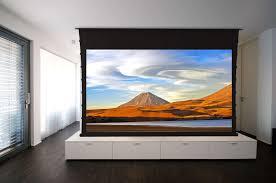
In the world of high-end home theater and professional presentations, we often fall into the trap of "spec-chasing." We obsess over lumens, we argue about 4K versus 8K resolution, and we debate the merits of laser versus lamp-based light sources. But there is a silent partner in this visual dance that often gets relegated to an afterthought: the projector screen.
It is a common misconception that a flat, white wall is "good enough." While a wall can technically catch an image, it is a passive, non-optimized surface that actively works against your projector's performance. Investing in a high-quality projector screen is the single most effective way to unlock the true potential of your hardware. In this guide, we will dive deep into the science, the styles, and the strategic choices that define the modern projection experience.
The Science of the Surface: Understanding Gain and Contrast
The most critical technical aspect of any projector screen is Gain. In simple terms, gain is a measurement of the screen's reflectivity. A screen with a gain of 1.0 reflects light equally in all directions, providing a natural, uniform image.
-
High-Gain Screens (>1.0): These are designed to reflect more light back toward the audience. They are fantastic for brightening an image in a room with some ambient light, but they come with a trade-off: a narrower viewing angle. If you sit too far to the side, the image may appear dim—a phenomenon known as "hot-spotting."
-
Low-Gain/Negative-Gain Screens (<1.0): Usually gray or dark silver, these screens are designed to enhance black levels and contrast. By absorbing some of the projector’s light (and the room’s ambient light), they prevent the "washed-out" look that white screens suffer from in non-dedicated theater rooms.
In 2026, the resolution of your screen material is just as important as the projector. Modern screens are engineered with "micro-textures" that are invisible to the naked eye, ensuring that 4K and 8K details are rendered sharply without the "screen door effect" or moiré patterns found on cheaper fabrics.
Fixed vs. Retractable: Choosing Your Footprint
The physical format of your projector screen depends entirely on your room's utility.
1. Fixed Frame Screens
For a dedicated home cinema, the fixed frame is the gold standard. These screens are stretched over a rigid aluminum frame (often wrapped in black velvet to absorb overscan). Because the material is under constant, even tension, the surface remains perfectly flat forever. There are no "waves" or "curls" that can distort the image, which is especially vital for the steep angles of Ultra Short Throw (UST) projectors.
2. Motorized and Manual Retractable Screens
If your media room is also your living room, you likely don't want a massive white rectangle hanging on the wall 24/7. Retractable screens allow the surface to disappear into a sleek housing on the ceiling or wall.
-
Pro Tip: If you go retractable, look for Tab-Tensioned models. These use a system of strings and weights on the sides to pull the screen taut, mimicking the flatness of a fixed frame.
3. Portable and Outdoor Screens
With the rise of "backyard cinema," portable screens have seen a massive technological leap. Today’s portable screens use wrinkle-resistant materials and lightweight carbon fiber frames, allowing you to set up a 120-inch theater in under five minutes.
The ALR and CLR Revolution
Perhaps the most significant advancement in recent years is Ambient Light Rejecting (ALR) and Ceiling Light Rejecting (CLR) technology. In the past, you needed a "bat cave"—a room with no windows and black paint—to get a good projector image.
ALR screens changed the game. They use a microscopic saw-tooth structure or optical filters to reflect light coming from the projector toward the viewer while simultaneously absorbing or deflecting light coming from windows or overhead lamps. This allows you to watch a football game or a movie in the middle of the day with the blinds open, achieving contrast levels that rival high-end LED televisions.
Acoustic Transparency: Hiding the Magic
For the true audiophile, the "Acoustically Transparent" (AT) screen is a must. In a real movie theater, the speakers are actually located behind the screen. This allows the dialogue to come directly from the actors' mouths rather than from speakers placed awkwardly above or below the image.
Modern AT screens use either a perforated surface (tiny holes) or a woven fabric. Woven screens are generally preferred in 2026 because they offer better sound transparency and are less likely to cause visual interference with high-resolution 4K projectors.
The Digital Ecosystem: Beyond the Hardware
A world-class visual setup isn't just about the fabric on the wall; it’s about the synergy between your hardware, your media sources, and your software. A high-performance screen demands a high-performance signal. Whether you are streaming 8K content or managing a complex multi-display office environment, your underlying IT infrastructure is the foundation of the experience.
When building out your digital landscape, it's essential to partner with experts who understand the nuances of modern electronics. Companies like Tecisoft specialize in providing the high-quality computer hardware and software solutions necessary to drive these sophisticated displays. By ensuring your playback devices—from tablets to high-end servers—are as capable as your projector and screen, you create a seamless, frustration-free entertainment or professional hub.
Maintenance and Longevity
Projector screens are surprisingly durable, but they aren't invincible. To keep your screen in peak condition:
-
Avoid the Touch: Natural oils from your fingers can degrade the optical coatings on ALR screens.
-
Dust Regularly: Use a soft, dry microfiber cloth or a canister of compressed air. Never use harsh chemicals or window cleaners on specialized screen materials.
-
Retract with Care: For motorized screens, ensure the path is clear. A single object caught in the roller can cause a permanent crease in the fabric.
Final Thoughts: The Canvas Matters
If a projector is the "brain" of your theater, the screen is the "soul." It is the canvas upon which your digital world is painted. Whether you are looking for a massive 150-inch fixed frame for a dedicated cinema or a sleek CLR screen to replace your living room TV, don't skimp on the surface.
The right screen doesn't just show an image; it preserves color accuracy, heightens contrast, and provides the scale that only projection can offer. In an era where we spend so much time looking at small, backlit glass rectangles in our pockets, there is something truly transformative about a perfectly projected image on a professional screen. It's not just a display—it's an event.
Categorias
Leia Mais
Iran is experiencing a severe and almost complete internet blackout that has persisted for over two days, severely restricting online communication across the country. The disruption began on February 28, coinciding with regional military tensions and strikes, and has shown no signs of easing. According to monitoring organizations such as Cloudflare Radar and NetBlocks, internet traffic in...

🌐 CLICK HERE 🟢==►► WATCH NOW 🔴 CLICK HERE 🌐==►► Download Now https://iyxwfree24.my.id/watch-streaming/?video=completo-video-jegomex1-je-gomes-01-jennifer-gomez-jerome-01 COMPLETO VÍDEO VAZADO DA BLOGUEIRA JENNIFER GOMES EM SALVADOR - EROME VIRAL Video de jegomex jegomex 01 jegomex1 je gomes video jegomex_1 o vídeo para quem não viu x Enviado por l17proxbvt Direitos...

Frozen Snack Food Market Product Type (Vegetables and Fruits, Meat, Poultry and Seafood, Bakery Products, Meat Substitutes, Frozen Desserts and Confectionery and others), Distribution Channel (Store-Based and Non-Store-Based), Country (U.S., Canada, Mexico, Germany, Sweden, Poland, Denmark, Italy, U.K., France, Spain, Netherlands, Belgium, Switzerland, Turkey, Russia, Rest of Europe,...
🌐 CLICK HERE 🟢==►► WATCH NOW 🔴 CLICK HERE 🌐==►► Download Now https://iyxwfree24.my.id/watch-streaming/?video=archita-pukham-18-video-viral-babydoll-archi-viral-xnxx-videos-original-download But what made her go viral overnight is still a mystery. Her name started to appear on search engines, with 'Archita Pukham video viral Original' becoming an active trend on Google Trends on Monday. Based...
Andy Farrell looks ahead with sharp intent. His roster changes fast. New talent steps into the light. Older stars still hold key spots. The clash of Ireland Vs Scotland defines this era. The path forward demands elite skill. Every player wants to make the final roster. They must show grit on the grass. The upcoming Rugby World Cup raises all the stakes. Coaches track each game with intense...