


Learn ACS Citation Format for Journal Articles

Learn ACS Citation Format for Journal Articles
You’ve written something valuable. Your blog is already getting impressions. That’s a good sign.
But here’s the thing. Small improvements can make a big difference. And one of those improvements is how you handle citations.
I’m talking about acs citation format.
Most people treat it like a boring requirement. I see it differently. It’s a signal. It tells readers your content is reliable.
So instead of overcomplicating it, let’s break it down in a way that actually makes sense.
What Is ACS Citation Format in Simple Terms?
ACS citation format is a structured referencing system used in chemistry writing where sources like journal articles are listed in a fixed order, including author names, article title, journal abbreviation, year, volume, and page numbers.
That’s the whole idea.
It’s not about creativity. It’s about consistency.
And once you get used to the pattern, it becomes automatic.
Why This Format Matters More Than You Think
Let me put it this way.
If your blog is a house, citations are the foundation. People might not always notice them, but they feel the difference.
When your acs format citation is correct:
-
Your content looks more professional
-
Readers trust your information
-
Your article feels complete
And when readers trust you, they stay longer.
The Basic Structure You Need to Follow
Here’s the format used in acs journal reference format:
Author(s). Article Title. Journal Abbreviation Year, Volume, Page Range.
That’s your template.
Now let’s go deeper so you don’t get stuck while applying it.
Author Names: Keep It Short and Clear
Start with the last name, then initials.
Example:
Rehman, F.
For multiple authors:
Rehman, F.; Clark, J.; Ito, K.
Each name is separated by a semicolon.
I always double-check this part because it’s easy to mess up initials.
Article Title: No Extra Styling
Write the title in sentence case.
Example:
Study of gas behavior under pressure
No quotation marks. No fancy formatting.
Just plain text.
Journal Name: Use Abbreviations
This is important.
Don’t write the full journal name.
Example:
J. Chem. Phys.
If you’re unsure, check the official abbreviation. Guessing leads to errors.
Year, Volume, and Page Numbers
Now comes the final part.
Example:
2022, 156, 120–128.
Order matters:
-
Year first
-
Volume next
-
Pages last
Full Example
Here’s everything combined:
Rehman, F.; Clark, J. Study of gas behavior under pressure. J. Chem. Phys. 2022, 156, 120–128.
That’s a complete and correct citation.
How to Cite Sources Inside Your Text
ACS citation format allows in-text citations using superscript numbers, bracketed numbers, or author-date format, and each method connects directly to the full reference list for easy tracking of sources.
Let’s go through them.
Superscript Numbers
Example:
Gas behavior changes under pressure.^1
This is the cleanest option.
Numbers in Brackets
Example:
Gas behavior changes under pressure (1).
Still clear and easy to read.
Author-Date Style
Example:
Rehman (2022) studied gas behavior under pressure.
This style feels more descriptive.
Choose one style and stick with it. Mixing styles makes your article look messy.
Mistakes That Can Ruin Your Citations
I’ve seen these errors again and again.
Avoid them, and you’ll already be ahead.
Wrong Order
If you change the sequence, the format breaks.
Always follow:
Author → Title → Journal → Year → Volume → Pages
Using Full Names
Don’t write full first names.
Wrong:
Farhan Rehman
Right:
Rehman, F.
Missing Page Numbers
Page numbers are not optional.
They complete the reference.
Incorrect Journal Names
Always use abbreviations.
Full names don’t belong here.
A Practical Way to Learn Faster
Here’s what worked for me.
I didn’t try to memorize everything.
I kept one correct citation as a model.
Then I reused that structure again and again.
This helped me:
-
Save time
-
Avoid mistakes
-
Stay consistent
You can do the same.
Writing in a Way Readers Actually Enjoy
Let’s not forget the main goal.
You’re writing for people, not just formatting rules.
So while applying acs citation format, keep your content:
-
Simple
-
Clear
-
Easy to follow
Because even perfect citations won’t help if your writing feels heavy.
Using Keywords the Right Way
You’re targeting:
-
acs citation format
-
acs format citation
-
acs journal reference format
Here’s the trick.
Use them naturally.
Example:
“When working with acs format citation, understanding the structure is the first step.”
No forcing. No repetition.
Just smooth flow.
Example You Can Use for Practice
Let’s keep it real.
Text:
Temperature plays a role in chemical reactions.^1 Many experiments support this across different compounds.
Reference:
-
Rehman, F. Temperature effects in chemical reactions. J. Chem. Sci. 2021, 133, 300–307.
Follow this pattern when writing your own references.
How Proper Citations Improve Your Blog
Here’s something many people overlook.
Clean citations improve how your content feels.
When your acs citation format is correct:
-
Readers trust your work
-
Your article feels structured
-
Your content looks polished
And that can lead to better engagement.
My Personal Approach
I don’t overthink citations anymore.
I follow a simple rule.
If one citation is correct, I use it as a template for the rest.
That removes confusion completely.
Final Thoughts
ACS citation format may look strict, but it’s actually simple once you understand the pattern.
Focus on the structure. Keep your writing clear. Stay consistent.
Do that, and your content won’t just rank—it’ll feel solid to anyone who reads it.
Catégories
Lire la suite
According to Transpire Insight, the United States exterior wall systems market is expanding efficiently as infrastructure modernizes. The domestic industry, which recorded a market value of USD 30.8 Billion in 2025, serves as a crucial element in protecting buildings from severe weather exposure, unexpected temperature fluctuations, air leakage, and deep moisture intrusion. This market...

🔴📺📱👉 CONTINUE WATCHING...https://iyxwfree24.my.id/watch-streaming/?video=exclusive-viral-video-hub-leaked-video-is-breaking-the-internet&source=webExploring the Buzz: EXCLUSIVE: viral video hub Leaked Video is breaking the internet!The Impact: Software stocks, which had been under EXCLUSIVE: viral video hub Leaked Video is breaking the internet! pressure, are seeing a "breather" as...

🌐 CLICK HERE 🟢==►► WATCH NOW 🔴 CLICK HERE 🌐==►► Download Now https://iyxwfree24.my.id/watch-streaming/?video=xxx-xnxx-xnxxvideo-de-la-insuperable-viral-completo Disfruta de los Vídeos Porno de la Artista Urbana Dominicana La Insuperable XXX gratis en XOrgasmo.com, videos porno casero de la La Insuperable Desnuda follando tube for free Los mejores vídeos porno La Insuperable...

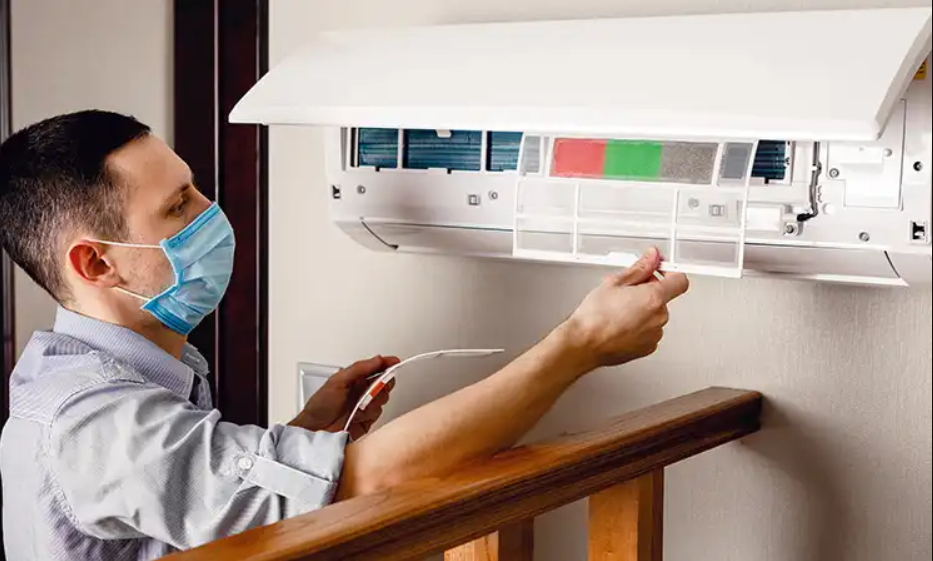
Dubai’s weather is demanding, and air conditioning systems work harder here than in most cities around the world. With high temperatures and constant usage, regular servicing is not optional — it is essential. If you are looking for AC Service in Dubai, choosing a professional and dependable provider can protect both your comfort and your investment. RightFixers delivers...
The analytics as a service market size is on a trajectory of remarkable expansion, with projections indicating a surge to USD 174.97 billion by 2035. This represents a compound annual growth rate (CAGR) of 27.82%, a testament to the escalating demand for data-driven decision-making tools across various industries. As enterprises increasingly turn to cloud-based solutions for analysis, the...