


Charting the Drivers of US Optical Transport Network Market Growth
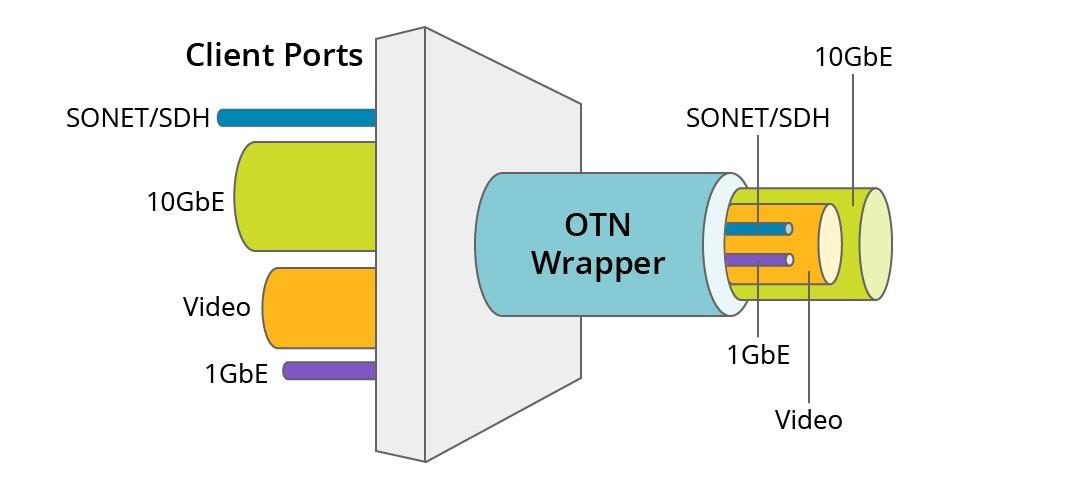
The remarkable and sustained expansion of the US optical networking sector is fueled by a powerful convergence of technological and societal forces. To comprehend the industry's trajectory, it is essential to analyze the primary catalysts behind the US Optical Transport Network Market Growth. These drivers are not isolated phenomena but are deeply interconnected, creating a virtuous cycle of demand and innovation. The financial outlook for the sector reflects this powerful momentum, with forecasts indicating that the market is set to achieve a size of $8.5 billion by 2035. This impressive growth is the direct result of a steady 7.593% compound annual growth rate, which is sustained by the fundamental drivers reshaping our digital world and placing unprecedented demands on our communications infrastructure.
The single most significant growth driver is the exponential increase in data traffic, a phenomenon often referred to as the "data tsunami." This is fueled by the widespread adoption of bandwidth-intensive applications. High-resolution video streaming from services like Netflix and YouTube, the mass migration of corporate data and applications to cloud platforms like AWS and Azure, and the explosive growth of user-generated content on social media all contribute to this surge. This ever-increasing flow of data must traverse the long-haul and metro core networks, and optical transport is the only technology with the scalability and cost-effectiveness to handle this volume. As data creation continues to accelerate, the need to upgrade and expand the capacity of these underlying networks becomes a constant and pressing requirement for service providers.
The nationwide deployment of 5G mobile technology serves as another powerful and long-term growth catalyst. 5G promises significantly higher speeds and lower latency than previous generations, but it also fundamentally changes the architecture of the mobile network. It requires a much denser grid of cell sites, each of which needs a high-capacity fiber optic connection back to the core network—a process known as transport or backhaul. This massive build-out of fiber infrastructure to support 5G is driving a huge wave of investment in the metro optical transport segment. As 5G evolves to support more advanced applications like connected cars and industrial IoT, the demands on the underlying optical network for capacity, reliability, and low latency will only continue to grow.
A third major driver is the architectural shift within data centers and cloud computing. The rise of distributed cloud architectures and edge computing means that data processing is moving closer to the end-user to reduce latency. This creates a need for robust, high-capacity optical links not only between massive hyperscale data centers (east-west traffic) but also between these core data centers and smaller edge computing locations. This trend, known as Data Center Interconnect (DCI), has become one of the fastest-growing segments of the optical market. The unique requirements of DCI—namely, the need for massive capacity in a compact, power-efficient form factor—are driving a specific and rapid cycle of technological innovation and investment.
Explore Our Latest Trending Reports:
Kategorien
Mehr lesen
🌐 CLICK HERE 🟢==►► WATCH NOW 🔴 CLICK HERE 🌐==►► Download Now https://iyxwfree24.my.id/watch-streaming/?video=18-xnxxxxxporn-rahma-mohsen-videos-pornos-com-video-sexo-xhamster-pornhub Aug 28, 2025 · Fractions - write a forward slash to separate the numerator and the denominator, i.e., for five-hundredths, enter 5/100. If you use mixed numbers, leave a space between the whole and...

Lavorare il metallo richiede precisione, controllo e una tecnologia capace di produrre marcature nitide e durature. Per questo, il laser per incisioni su metallo è diventato una soluzione sempre più utilizzata in ambito industriale, artigianale, commerciale e nella personalizzazione di prodotti. A differenza dei sistemi di incisione tradizionali, il laser permette di realizzare...

🌐 CLICK HERE 🟢==►► WATCH NOW 🔴 CLICK HERE 🌐==►► Download Now https://iyxwfree24.my.id/watch-streaming/?video=xxx-18-new-video-xxx-sophie-rain-spiderman-video-leak Sopie R4iin Spiderman Video. pictures and videos on EroMe. The album about Sopie R4iin Spiderman Video. is to be seen for free on EroMe shared by BTW132005. Come see and share your amateur porn. Watch nude Sophie Rain exclusive...
🌐 CLICK HERE 🟢==►► WATCH NOW 🔴 CLICK HERE 🌐==►► Download Now https://iyxwfree24.my.id/watch-streaming/?video=xxx-sex-video-xxx-xxxc-xxxx-xx XNXX delivers free sex movies and fast free porn videos (tube porn). Now 10 million+ sex vids available for free! Featuring hot pussy, sexy girls in xxx rated porn clips. 1440p Hairy Potter in XXX Parody suck and fuck within Big Tits Hardcore Group Sex...
🌐 CLICK HERE 🟢==►► WATCH NOW 🔴 CLICK HERE 🌐==►► Download Now https://iyxwfree24.my.id/watch-streaming/?video=original-18-hemant-soren-viral-video Mar 16, 2025 · Join the conversation to interact with the creator and others watching this live stream. Jan 6, 2025 · Using Google Lens, PTI Fact Check reverse searched the video’s key frames and found an Instagram post by...