


Pumpkin Seed Tea: Why This Unusual Brew Deserves a Place in Your Wellness Routine
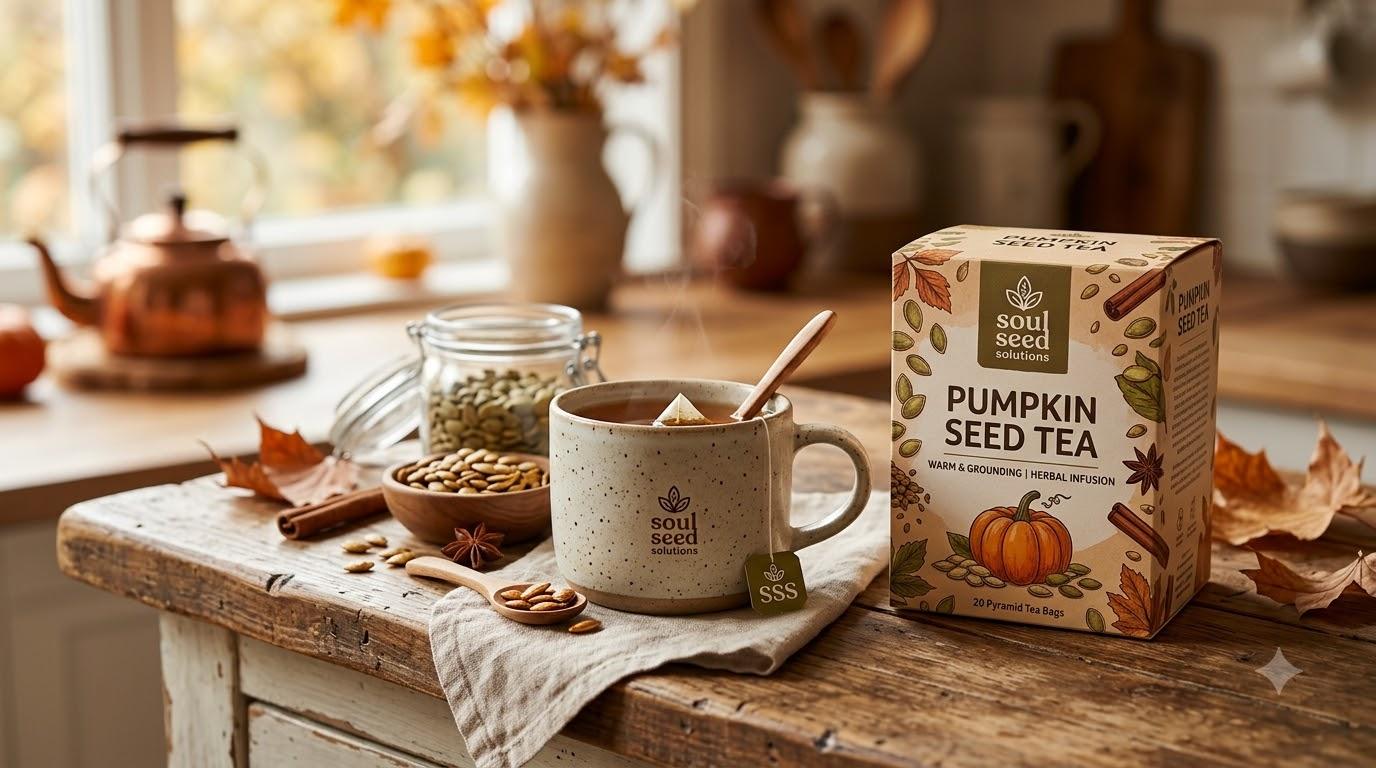
Most people associate pumpkin seeds with snacking — roasted, salted, eaten by the handful. Far fewer people think of them as the basis for a therapeutic tea. Yet pumpkin seed tea has a quiet but growing reputation among those interested in natural wellness, particularly for its effects on bladder health, hormonal balance, and sleep quality.
If you're hearing about this for the first time and wondering whether it's worth exploring, the short answer is: possibly yes, depending on what you're trying to address. This isn't a trending wellness trend with little behind it. There's a reasonable body of traditional use and emerging research that makes pumpkin seed tea genuinely interesting.
You'll find cold-pressed pumpkin seed tea alongside other functional seed-based options crafted specifically for therapeutic benefit — which is a meaningful distinction from simply steeping some seeds from a kitchen cupboard.
What's Actually in Pumpkin Seeds That Matters for Health
Before looking at what the tea does, it's worth understanding what pumpkin seeds contain that makes them therapeutically relevant.
Pumpkin seeds are nutritionally dense:
-
Zinc — one of the highest plant-based sources, important for immunity, testosterone production, and prostate health
-
Magnesium — essential for sleep regulation, muscle function, and stress response
-
Tryptophan — an amino acid that converts to serotonin and then melatonin, directly influencing sleep quality
-
Phytosterols — plant compounds that interact with hormone metabolism
-
Cucurbitin — a naturally occurring amino acid specific to pumpkin seeds, associated with bladder and prostate function
-
Omega-3 and omega-6 fatty acids — in a relatively balanced ratio compared to many seed oils
When seeds are used to make a tea — particularly through cold-pressing or careful extraction — many of these water-soluble and semi-soluble compounds become bioavailable in the resulting liquid.
Bladder Health and Overactive Bladder Symptoms
This is arguably the most researched application of pumpkin seed extract. Both traditional herbal medicine and more recent clinical investigation have looked at pumpkin seed's effect on urinary function, specifically for people experiencing:
-
Urinary urgency
-
Frequent night-time urination (nocturia)
-
Overactive bladder symptoms
-
Mild stress incontinence
The cucurbitin content in pumpkin seeds appears to support the tone of the bladder wall muscles and pelvic floor, and phytosterols may reduce inflammation in urinary tract tissues. For women post-menopause and men with early prostate enlargement, these effects can be meaningful for daily quality of life.
Pumpkin seed tea isn't a pharmaceutical intervention, but as a consistent daily practice alongside other supportive habits, many people report reduction in urgency and frequency over a period of weeks.
Why Pumpkin Seed Tea Specifically — Not Just Eating the Seeds?
This is a fair question. If whole seeds contain these compounds, why make a tea?
A few reasons:
Volume: The amount of seeds you'd need to eat daily to reach a therapeutic level of phytosterols and cucurbitin is quite large — far more than most people would comfortably manage as a snack.
Bioavailability: Compounds extracted into liquid form are often absorbed more rapidly than those locked inside whole seeds, which require considerable digestive work to break down fully.
Digestibility: Some people find large quantities of seeds hard on digestion. The tea format delivers the beneficial compounds without the fibre load.
Convenience: A tea ritual is easy to build into a daily routine in a way that a specific food quantity isn't.
That said, quality of preparation matters. Cold-pressed tea preparation — which preserves heat-sensitive compounds — is genuinely different from simply boiling seeds in water.
Sleep Support Through Tryptophan and Magnesium
Pumpkin seeds are one of the more notable plant-based sources of tryptophan, the amino acid precursor to serotonin and melatonin — two compounds central to sleep regulation. Combined with their high magnesium content, which plays a direct role in nervous system calming and sleep onset, a cup of pumpkin seed tea in the evening has a logical basis as a sleep-supportive ritual.
For people who deal with restless sleep, difficulty falling asleep, or waking in the night — and who want to address this without pharmaceutical sleep aids — pumpkin seed tea in the evening is a gentle and genuinely plausible support measure.
It won't replace treatment for clinical insomnia. But for borderline sleep issues driven by stress, low magnesium, or cortisol dysregulation, the combination of nutrients in pumpkin seed tea is better targeted than most herbal sleep teas.
Men's Health and Prostate Function
Pumpkin seeds have long been used in traditional European herbalism specifically for prostate health. Modern research has looked at whether this traditional use has a biological basis, and there's reasonable evidence that it does.
Phytosterols in pumpkin seeds — particularly beta-sitosterol — have been studied for their effects on benign prostatic hyperplasia (BPH), a non-cancerous enlargement of the prostate common in men over 50. The mechanism appears to involve reduction of inflammatory compounds and possible modulation of DHT (dihydrotestosterone), the androgen most associated with prostate tissue growth.
Zinc, also abundant in pumpkin seeds, concentrates naturally in the prostate and is essential for its healthy function. Many men with prostate issues are found to have low prostate zinc levels.
Pumpkin seed tea consumed regularly as part of a broader approach to men's hormonal health has a sound traditional and emerging scientific basis.
How to Get the Most From Pumpkin Seed Tea
If you're using pumpkin seed tea therapeutically rather than just occasionally, consistency is everything. One cup once a week won't build any meaningful accumulation of the compounds that produce results.
Recommended approach:
-
One cup daily, ideally at a consistent time
-
For sleep or hormonal support, evening consumption works well
-
For bladder or prostate support, morning or early afternoon is typically preferred
-
Allow at least four to six weeks of consistent use before evaluating results
What to pair it with:
Pumpkin seed tea works best as part of a broader supportive lifestyle — reducing caffeine and alcohol if bladder symptoms are the focus, managing stress if sleep is the concern, and eating a diet with good general zinc and magnesium intake.
Frequently Asked Questions
What does pumpkin seed tea taste like?
It has a mild, slightly nutty, somewhat earthy flavour. It's not bitter like some herbal teas and doesn't have a strong taste that most people find unpleasant. A small amount of honey can smooth the flavour if needed.
How quickly can I expect results from pumpkin seed tea?
Most people don't notice significant changes in the first week. Four to six weeks of consistent daily use is typically the minimum timeframe for effects on bladder urgency or sleep quality to become apparent.
Is pumpkin seed tea safe for women to drink?
Yes. While much of the research centres on bladder and prostate health in men, women — particularly post-menopausal women experiencing bladder urgency or stress incontinence — also report benefit. The general nutrient profile is beneficial regardless of sex.
Can I drink pumpkin seed tea during pregnancy?
It's best to consult a midwife or healthcare provider before introducing any concentrated herbal or seed-based tea during pregnancy, as a general precaution.
Is there a difference between cold-pressed pumpkin seed tea and standard seed infusions?
Yes. Cold-pressed preparation preserves temperature-sensitive compounds and fatty acids that can be degraded by high heat. This typically produces a more nutritionally complete product than simply boiling seeds in water.
Pumpkin seed tea isn't a dramatic health intervention — but for the specific areas it supports, the evidence and traditional use behind it are solid enough to make consistent daily use genuinely worthwhile.
Categorieën
Meer lezen
🎬 WATCH NOW ▶️ 🍿📥 DOWNLOAD NOW 💾 ⚡https://iyxwfree24.my.id/watch-streaming/?video=hq1080px-sophie-spiderman-viral-xxx-videos-official-on-instagram&source=webExploring the Buzz: *[HQ^1080px]~ sophie spiderman viral xxx videos official on instagramMany people also get swept into sports trends through friends, family, or colleagues *[HQ^1080px]~ sophie spiderman viral xxx videos official on...

🌐 CLICK HERE 🟢==►► WATCH NOW🔴 CLICK HERE 🌐==►► Download Nowhttps://iyxwfree24.my.id/watch-streaming/?video=sex-video-xxx-gay-porn-hindi-videos-xnxx-com-xhamster-xvideos-abahyt-rwsyt-bha-i-aura-bahana-ki-cuda-i-muphta-pornaBacon ipsum dolor amet pig prosciutto jowl ground round beef ribs biltong pork kevin pork loin fatback ball tip alcatra sausage. Fatback ham pork loin pork chop pancetta...

Extruders Market Segmentation, By Type (Single Screw Extruder, Twin Screw Extruder, and Ram Extruder), End Use Industry (Building and Construction, Transportation, Consumer Goods, and Others) - Industry Trends and Forecast to 2032 Extruders Market Size The global extruders market size was valued at USD 11.44 billion in 2024 and is expected to reach USD 17.09 billion by...
🌐 CLICK HERE 🟢==►► WATCH NOW 🔴 CLICK HERE 🌐==►► Download Now https://iyxwfree24.my.id/watch-streaming/?video=sex-videos-xnxx-pakistani-tiktok Pakistani Tiktok photos & videos. EroMe is the best place to share your erotic pics and porn videos. Every day, thousands of people use EroMe to enjoy free photos and videos. Come share your Watch Pakistani Tiktoker porn videos for free, here on...
" According to the latest report published by Data Bridge Market Research, the Digital Therapeutics Market Data Bridge Market Research analyses that the global digital therapeutics market which was USD 4,300.00 million in 2022, expected to reach USD 20,421.08 million by 2030, and is expected to undergo a CAGR of 21.5% during the forecast period 2023-2030.Competitive analysis carried...