


Startup Fundraising Consultant & Startup Finance Advisors UK
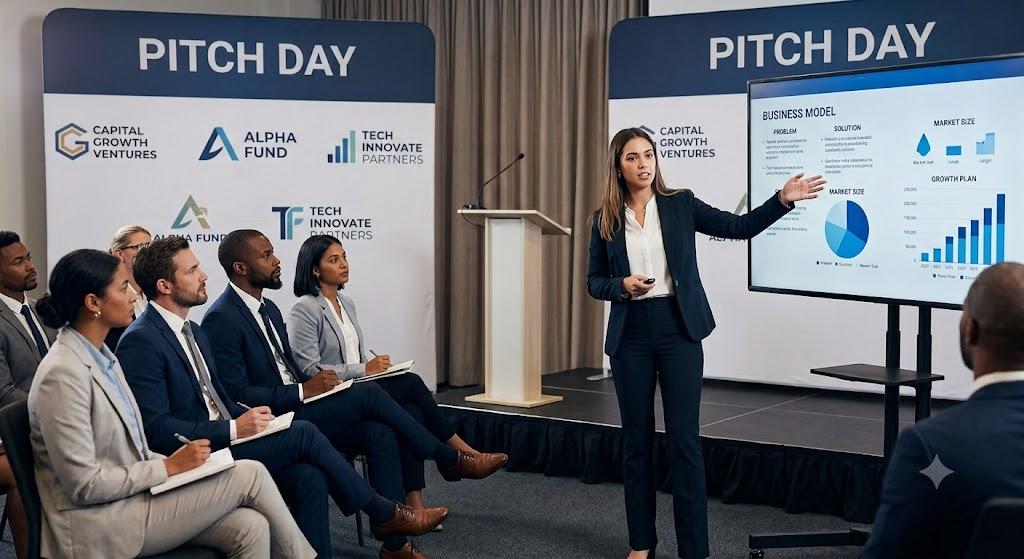
Raising investment is rarely just about having a strong business idea. Investors need to understand the opportunity, market, numbers, risks, and the founder's ability to execute. For many startups, the challenge is not finding an ambitious goal but turning that goal into a credible investment case.
This is where expert fundraising and financial guidance can make a meaningful difference. The right support can help founders prepare their business, strengthen their financial story, communicate their opportunity clearly, and approach investors with greater confidence.
What does a startup fundraising consultant do?
A startup fundraising consultant helps founders prepare for the investment process, from developing a fundraising strategy to creating investor materials and preparing for investor conversations. Their role is to make the business easier for investors to understand and assess.
Fundraising support can include:
-
Assessing investor readiness
-
Developing a fundraising strategy
-
Refining the investment proposition
-
Creating or improving an investor pitch deck
-
Developing financial projections
-
Preparing an investment memo or business plan
-
Supporting investor outreach
-
Preparing founders for investor questions
The goal is not simply to make a presentation look professional. Investors need evidence that a company understands its market, customers, business model, financial position, and growth opportunity.
Why is financial preparation important before fundraising?
Financial preparation gives investors a clearer view of how a startup makes money, how much capital it needs, how that capital will be used, and what financial outcomes the business is targeting. Strong projections also demonstrate that the founder understands the economics and risks behind the growth plan.
A startup does not need perfect predictions. It needs reasonable assumptions that can be explained and defended.
Before approaching investors, founders should understand:
-
Revenue assumptions: What drives sales and how quickly can revenue grow?
-
Operating costs: What expenses are required to deliver the product or service?
-
Cash flow: How much cash does the business need to operate?
-
Burn rate: How quickly is available capital being used?
-
Runway: How long can the company operate before additional funding is required?
-
Funding requirement: How much capital is needed and why?
-
Use of funds: What milestones will the investment help achieve?
Financial projections become particularly important when investors start asking detailed questions. A founder who can explain the reasoning behind the numbers is usually better positioned than someone presenting figures without understanding their underlying assumptions.
How do startup finance advisors UK support founders?
startup finance advisors uk can help founders connect financial planning with the wider investment story. Instead of treating numbers as a separate spreadsheet, effective advice brings financial projections, business strategy, market opportunity, and the funding request together.
This matters because investors rarely assess financial figures in isolation. They want to understand what the numbers mean and how they connect with the company's growth strategy.
For example, if a startup forecasts rapid revenue growth, investors may ask:
-
What evidence supports the growth assumption?
-
How much does it cost to acquire a customer?
-
What is the expected customer lifetime value?
-
What sales capacity is required?
-
How much additional capital will be needed?
-
What milestones will be reached with the requested funding?
A strong financial plan gives the founder a structured way to answer these questions.
When should a startup get fundraising support?
Founders should consider fundraising support before actively approaching investors, particularly when preparing for their first significant funding round. Getting advice early can reveal weaknesses in the business case before those weaknesses appear in investor meetings.
Support can be useful when:
-
The company has traction but struggles to communicate it.
-
The founder is unsure how much money to raise.
-
Financial projections are incomplete or difficult to defend.
-
Previous investor meetings have not progressed.
-
The pitch deck explains the product but not the investment opportunity.
-
The founder needs help preparing for investors.
-
Fundraising is taking attention away from running the company.
Preparation is particularly important because investors evaluate more than the idea. They look at evidence, execution, market opportunity, team capability, financial logic, and potential return.
An investor pitch should therefore demonstrate why the opportunity exists and why the particular team is capable of capturing it.
What should a startup include in its fundraising materials?
A strong fundraising package normally combines several connected assets rather than relying on a pitch deck alone.
Investor pitch deck
The deck should communicate the problem, solution, market, business model, traction, competitive position, team, financial opportunity, funding requirement, and use of funds.
Financial projections
Financial forecasts should show how the business expects to develop financially and what assumptions drive those results.
Investment memo or business plan
This provides additional detail behind the investment case and demonstrates that the founder has considered the company's strategy, risks, market, and growth plan.
Keeping these materials consistent is essential. The revenue figures in the pitch should match the financial model, while the funding request should connect directly to the milestones the company plans to achieve.
How can founders choose the right fundraising advisor?
The right advisor should understand both startup finance and investor communication. Look for someone who can explain the reasoning behind their recommendations rather than simply offering templates or generic fundraising advice.
Consider:
-
Relevant experience with startups at your funding stage
-
Understanding of your target investor type
-
Evidence of previous fundraising experience
-
Ability to work with financial projections
-
Knowledge of investor expectations
-
A structured process for improving investor readiness
-
Clear communication and realistic expectations
Founders should also avoid choosing an advisor solely because they promise funding. No legitimate advisor can guarantee that investors will say yes. Good advice improves preparation, positioning, and communication, while the final investment decision remains with investors.
What should founders expect from the fundraising process?
Fundraising should be treated as a structured business process rather than a single pitch meeting. Preparation comes first, followed by investor targeting, outreach, meetings, due diligence, negotiation, and ultimately the investment decision.
A practical process might look like this:
-
Assess investor readiness.
-
Clarify the business and investment proposition.
-
Build credible financial projections.
-
Prepare the pitch and supporting documents.
-
Identify appropriate investors.
-
Begin targeted outreach.
-
Hold investor meetings.
-
Respond to questions and due diligence.
-
Negotiate terms.
-
Complete the investment process.
Strong preparation gives founders consistency across every stage. The numbers in the financial model should support the pitch, while the pitch should reflect the underlying business strategy.
Final thoughts
Startup fundraising becomes easier to navigate when founders stop viewing it as simply a search for money and start treating it as a process of building investor confidence.
A clear business model, credible financial projections, convincing evidence, and a well-structured investment story can help investors understand both the opportunity and the risks.
Expert guidance can be particularly valuable when founders are preparing for an important funding round or struggling to turn a promising business into a compelling investment case.
The objective is not to make the startup sound bigger than it is. It is to present the real opportunity clearly, support the story with evidence, and give investors enough confidence to explore the opportunity further.
FAQs
1. What is a startup fundraising consultant?
A startup fundraising consultant helps founders prepare their strategy, financial information, investor materials, outreach, and investor conversations to improve overall fundraising readiness.
2. Do startups need financial advisors before raising investment?
Not always, but professional financial guidance can help founders create realistic projections, understand their funding requirements, and prepare stronger answers to investor questions.
3. What do investors look for before funding a startup?
Investors commonly assess the market opportunity, customer demand, traction, business model, team, financial potential, competitive position, risks, and the founder's ability to execute.
Categorías
Leer más
Sell World Cup Tickets: Shared information helps reduce confusion and supports timely action. Staff members monitor progress and update records. At the center of many planning conversations FIFA World Cup 2026 provides a common framework for coordination efforts. Leaders evaluate outcomes and refine approaches. Practical management remains important. Each review supports readiness and helps...

Driving professionally requires more than basic driving knowledge. Drivers who transport passengers have greater responsibilities because they are responsible for the safety and comfort of the people in their vehicle. Professional driving requires strong road awareness, excellent decision making, and a clear understanding of traffic regulations. This is why Class 4 License Training is...

Pokémon-Mega-Sumpex-Deck Stürze dich in die Welt der Pokémon-Karten mit einem beeindruckenden Mega-Sumpex-Deck, das speziell für das Sammelkartenspiel Pocket entwickelt wurde. Dieses Deck basiert auf dem mächtigen Pokémon Mega-Sumpex, das durch seine enorme Stärke besticht und in der Lage ist, schwere Felsen mühelos durch die Luft zu schleudern. Im...

"Global Executive Summary Cheese Spread Market Market: Size, Share, and Forecast CAGR Value The global cheese spread market is expected to reach USD 5.07 billion by 2033 from USD 3.35 billion in 2025, growing with a substantial CAGR of 5.4% in the forecast period of 2026 to 2033 The global Cheese Spread Market Market analysis report gives a careful overview...

The US Cloud-Based PLM Market scope encompasses product design, development, collaboration, and lifecycle management across multiple industries. Estimated at 8.88 USD Billion in 2023, the market is expected to grow from 10.5 USD Billion in 2024 to 56.5 USD Billion by 2035, with a CAGR of 16.531% during 2025–2035. Cloud PLM adoption is primarily driven by the need for operational...
