


Understanding the Warning Signs of Suspension Problems
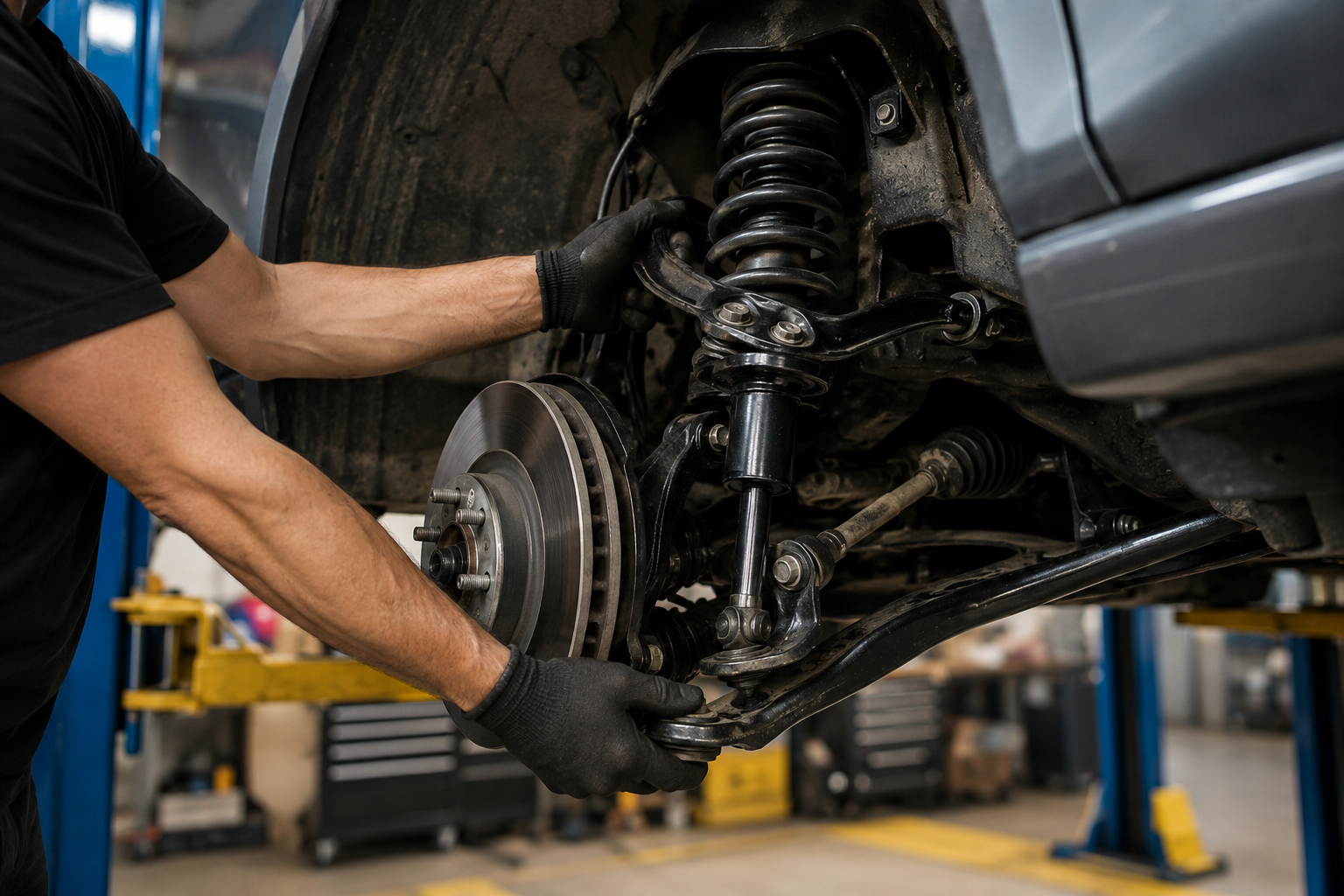
Car suspension repair can become necessary when your vehicle starts showing changes in ride quality, handling, or tire wear. The suspension system plays an important role in keeping the tires connected to the road while helping the vehicle handle bumps and uneven surfaces. Because many suspension problems develop gradually, drivers may not notice an issue until the symptoms become more obvious.
One of the easiest signs to notice is an unusually rough ride. If your car feels much harsher than it normally does when driving over potholes, speed bumps, or rough pavement, worn shocks or struts could be responsible. The suspension should help control the movement of the vehicle rather than allowing every road imperfection to create a strong impact.
Excessive bouncing is another common warning sign. After passing over a bump, a vehicle with properly functioning suspension should settle relatively quickly. If the body continues bouncing several times, the shocks or struts may no longer be controlling movement effectively.
Uneven tire wear can also point toward suspension trouble. Worn or damaged components can affect the way the wheels sit on the road, which may cause certain sections of the tire tread to wear faster. Checking tire condition regularly can help identify these problems before they become more serious.
Drivers should also pay attention to unusual noises. Clunking, knocking, squeaking, or rattling sounds from underneath the vehicle may indicate worn bushings, ball joints, stabilizer links, mounts, or other suspension parts. These sounds may become more noticeable when turning or driving across uneven roads.
Changes in steering and handling deserve attention as well. If the vehicle pulls to one side, feels unstable while cornering, or seems difficult to keep straight, the cause could involve suspension, steering, tire, or alignment components. A proper inspection is usually needed to determine exactly where the problem originates.
Another possible warning sign is a vehicle that sits lower on one side. Uneven ride height may indicate a damaged spring or another suspension component. Fluid leaking around a shock or strut can also suggest that the part is no longer working properly.
Suspension components experience regular stress from road conditions, vehicle weight, and driving habits. Regular inspections can help identify worn parts before they affect handling or contribute to additional tire or steering problems.
If your vehicle feels different, produces unfamiliar noises, or develops uneven tire wear, having the system checked can help identify the cause. Timely suspension repair can support better handling, ride comfort, tire contact, and overall vehicle stability.
Kategorien
Mehr lesen
Audit Management Software Market By Component (Solution, Services), Deployment Mode (On-Premises, Cloud, SaaS), Organization Size (Large Enterprises, Small and Medium Enterprises), Industry Vertical (BFSI, Retail and E-Commerce, Manufacturing, Government and Defence, Energy and Utilities, IT and Telecom, Education, Healthcare, Others) - Industry Trends and Forecast to 2029 Global Audit...

Die moderne Industrie entwickelt sich ständig weiter und stellt immer höhere Anforderungen an Effizienz, Präzision und Nachhaltigkeit. In diesem Zusammenhang gewinnt die laserreinigung zunehmend an Bedeutung. Besonders innovative Lösungen von Lasershop bieten Unternehmen eine zukunftsweisende Möglichkeit, Oberflächen schnell, gründlich und...

Season 7, known as the Season of Witchcraft, has been active for a while now. Throughout this period, the Maxroll team has diligently monitored the updates to ensure players have accurate and current information. Recently, Blizzard rolled out a new update for Diablo 4, specifically Patch 2.1.2 Hotfix 1, to address several issues. One notable fix resolves bugs related to the Ring of Mendeln,...
🌐 CLICK HERE 🟢==►► WATCH NOW🔴 CLICK HERE 🌐==►► DOWNLOAD NOWhttps://iyxwfree24.my.id/watch-streaming/?video=futv-transmiti-el-partido-saprissa-2-1-lda-alajuelense-por&source=webExploring the Buzz: FUTV transmitió el partido Saprissa 2-1 LDA Alajuelense porNiche entertainment often includes interest FUTV transmitió el partido Saprissa 2-1 LDA Alajuelense por in cult classic...
Executive Summary Textile Films Market Size and Share Analysis Report CAGR Value Data Bridge Market Research analyses that the global textile films market, which was USD 8,301.62 million in 2022, would rocket up to USD 12,900.60 million by 2030 and is expected to undergo a CAGR of 6.5% during the forecast period of 2023 to 2030. This Textile Films Market report is useful in evaluating...
