


What Are GI Grating Specifications? A Complete Guide for Buyers
Introduction
If you have ever walked over a massive drainage ditch, stepped onto an industrial walkway, or looked down through the floor of a busy factory, you have likely stood right on top of a GI grating. This rugged, slotted mesh is the unsung hero of modern construction, providing a steady footing while letting light, air, and water pass right through. But if you are stepping into the market to buy some for your own project, looking at a manufacturer's catalog can feel a bit like reading a foreign language. There are endless numbers, letters, and terms thrown around that can quickly make your head spin. That is exactly why we put together this straightforward, no-nonsense buyer's guide. We are going to break down everything you need to know about these sturdy panels so you can make a smart, confident purchase without getting bogged down by complicated industry talk.
The Basics of GI Grating Specifications
When we talk about "specifications," we are really just talking about the DNA of the panel. It is the specific recipe of measurements, shapes, and finishes that tells you exactly what a particular piece can handle. You see, you cannot just walk into a shop and ask for a generic metal grid. A panel meant to support a heavy forklift in a warehouse needs to be radically different from one meant to cover a rainwater gutter outside a suburban home.
Understanding these details is the secret to getting a product that will not bend, snap, or rust out on you after a couple of years. It saves you from the twin traps of overspending on something that is overkill, or underspending on something that is downright dangerous. By getting a grip on how these panels are built, you can match the right product to your exact physical environment.
Key Features That Define a Quality Panel
To get exactly what you need, you have to look at the individual ingredients that make up the structure. Think of it like buying a custom suit—you need to know the measurements of the different parts to get the perfect fit.
The Bearing Bars and Cross Rods
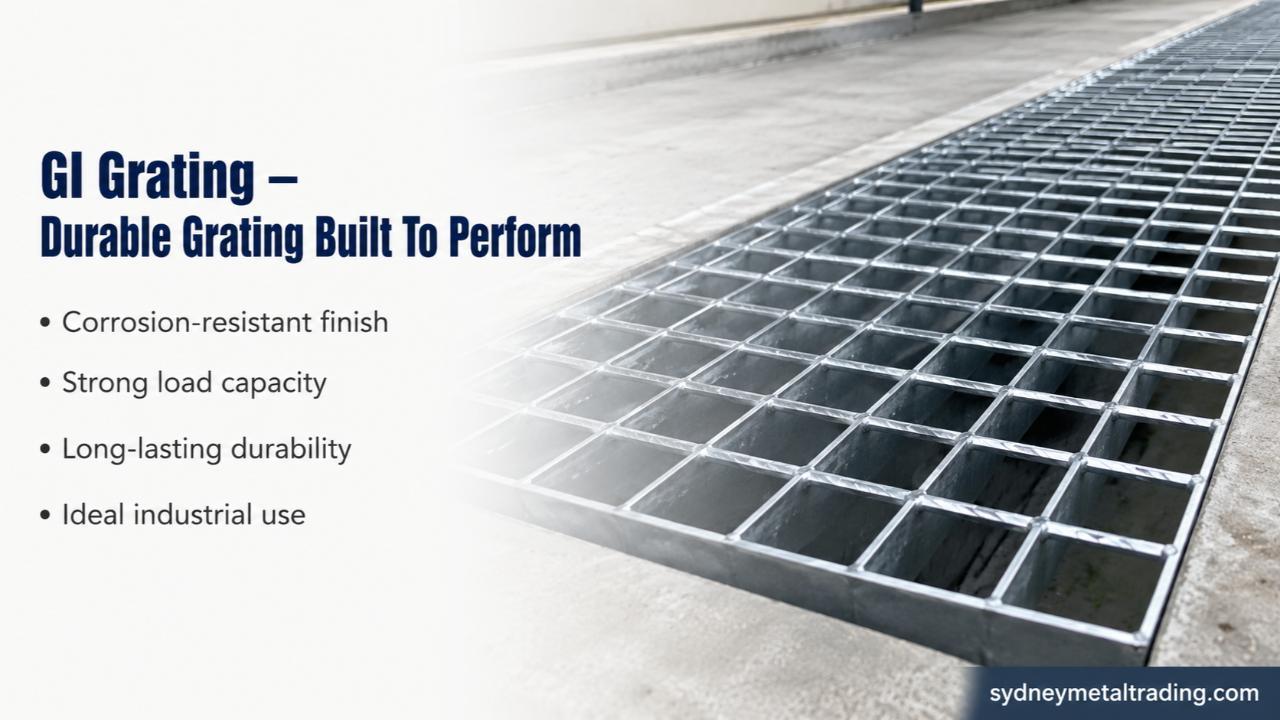
The real backbone of any panel is the set of flat metal strips running parallel to each other. These are called the bearing bars, and they do all the heavy lifting. How thick they are and how deep they go will directly dictate how much weight the panel can bear. Running perpendicular across these bars are the cross rods, which are usually twisted or round small bars. They lock the main bars in place and keep them from twisting out of shape when things get heavy.
The Gaps and Spacing
The spaces between these bars matter just as much as the metal itself. The distance between the center of one bearing bar and the next creates the grid pattern. If you are installing this in a place where people walk in high heels or where small tools might drop through, you will want a much tighter grid. If it is just for a heavy-duty drainage ditch where maximum water flow is the goal, wider gaps are your best friend.
Choosing the Right Surface Style
Not all panels are smooth on top. Depending on where your project is located, the texture of the metal can be a lifesaver—literally.
-
Smooth Surfaces: Great for standard walking paths, easy to clean, and gentle on rolling cart wheels.
-
Serrated Surfaces: These feature tiny, teeth-like notches cut into the tops of the bars. This is an absolute must-have for wet, oily, or icy environments where slipping is a major hazard.
How Hot-Dip Galvanization Changes Everything
You might be wondering what the "GI" part of the name actually stands for. It means Galvanized Iron, but in the modern world, it almost always refers to steel that has been treated with a protective zinc coating. This step is where the real magic happens. Raw steel is tough, but it hates moisture and oxygen. Leave it bare outside, and it will turn into a rusty, flaky mess in no time.
To fix this, manufacturers take the fully welded or locked steel panel and dunk it entirely into a massive bath of molten zinc. This isn't just a quick coat of spray paint; it is a chemical bond. The zinc fuses to the iron at a molecular level, creating a rugged shield. Even if the surface gets scratched or dinged during installation, the surrounding zinc sacrifices itself to protect the underlying metal from rust. This process turns a standard metal grid into a powerhouse capable of surviving decades out in the rain, sun, and harsh chemical environments.
Matching Your Panel to the Right Environment
Before you sign on the dotted line, you have to look at the ground reality of where your panels are going to live. A mismatch here can lead to sagging floors or premature failure.
First, think about the load type. Are you designing a walkway exclusively for human footsteps, or will heavy delivery trucks be driving over it? Heavy vehicles require incredibly deep and thick bearing bars, while pedestrian paths can afford to use much lighter, thinner profiles that are easier on the budget.
Second, consider the spans. This is the distance between the structural supports holding up the edges of your panel. The further apart those supports are, the stronger your panel needs to be to prevent bowing in the middle. Always map out your structural framework before finalizing your panel dimensions.
Conclusion
Navigating the world of industrial materials does not have to be a stressful chore. Once you understand that choosing the right panel is simply a matter of balancing bar thickness, grid spacing, and surface texture, the entire process becomes incredibly clear. Armed with this knowledge, you are fully equipped to look over any catalog and choose the exact setup that will keep your project safe, sturdy, and rust-free for years to come. When you are ready to source high-quality materials that meet your exact project needs, the team at Sydney Metal Trading LLC is always here to provide expert guidance, reliable support, and top-tier GI grating solutions tailored just for you.
Categorias
Leia Mais
Common Reasons Insulation Grant Applications Are Rejected is something many UK homeowners want to understand before applying for financial help with improving their home’s energy efficiency. As heating costs continue to put pressure on household budgets, insulation grants have become a popular option for people looking to reduce heat loss and create a warmer living space. Many homeowners...

Detailed Analysis of Executive Summary Europe Smart Mirror Market Market Size and Share CAGR Value The Europe Smart Mirror Market size was valued at USD 113.42 Million in 2024 and is expected to reach USD 337.42 Million by 2032, at a CAGR of 16.9% during the forecast period The Europe Smart Mirror Market report makes available the current and forthcoming technical and financial...

Comprehensive Outlook on Executive Summary Micro-Positron Emission Tomography (PET) Systems Market Size and Share CAGR Value In recent years, micro- positron emission tomography (PET) systems have been highly utilized in both the medical and research fields. These systems are used along with magnetic resonance imaging (MRI) scans and computed tomography (CT) for diagnosing...
Service Overview GOOSE VPN, based in the Netherlands, launched in 2014. The provider presents itself as an approachable, customer-focused VPN that emphasizes easy use and online security. We put the service through hands-on testing to see how it stacks up against rivals. There are two subscription options: a 50 GB monthly plan and an unlimited-data plan. Both plans are available month-to-month,...
According to the latest report published by Data Bridge Market Research, the Epistaxis Treatment Market CAGR Value The global epistaxis treatment market size was valued at USD 253.6 million in 2024 and is expected to reach USD 383.33 million by 2032, at a CAGR of 5.30% during the forecast period Competitive analysis carried out in the...