


Mobile App Development Services in Australia: Practical Insights

Mobile App Development Services in Australia: What Businesses Often Overlook
Many app projects begin with clear goals, approved budgets, and confident timelines. A few months later, the same project is dealing with delayed integrations, changing requirements, budget adjustments, and growing frustration among stakeholders.
That pattern is more common than many organizations realize.
When evaluating mobile app development services in Australia, most businesses focus on features, design quality, and development costs. Those factors matter, but they rarely determine long-term success. What usually matters more is how well the application survives operational pressure after launch. Scalability, maintenance, integration reliability, security updates, and ownership clarity often become bigger concerns than the original development work.
The organizations that achieve better outcomes typically spend more time understanding implementation realities before development starts.
Key Takeaways
-
App failures often begin with planning gaps rather than coding issues
-
Integration complexity is frequently underestimated during budgeting
-
Poor architecture decisions become expensive during growth phases
-
Maintenance planning should begin before development starts
-
Vendor selection affects long-term operational costs more than initial pricing
Why App Projects Become More Complicated Than Expected
Most project plans look reasonable before development begins. The requirements are documented, milestones are approved, and expectations appear aligned.
Then reality arrives.
A payment provider changes technical requirements. Internal departments request additional functionality. Security reviews introduce new compliance concerns. Third-party systems do not behave exactly as expected.
This is usually where projects become messy.
Many businesses purchasing mobile app development services in Australia assume development is the most difficult phase. In reality, implementation coordination often creates bigger challenges. The development team may depend on external vendors, internal approvals, infrastructure access, and business stakeholders who have competing priorities.
One thing many teams underestimate is how quickly small requirement changes accumulate. A minor modification rarely stays minor once it affects workflows, testing, integrations, and user permissions.
Experienced teams account for these realities early. Less experienced teams often react to them as unexpected problems.
Understanding the Real Cost Beyond Initial Development
Discussions about mobile app development cost in Australia often focus on development estimates. Unfortunately, many organizations evaluate cost only through the lens of initial delivery.
That creates problems later.
The first version of an application is only one part of the investment. Ongoing support, infrastructure expenses, monitoring, security updates, performance optimization, and platform compatibility all contribute to long-term ownership costs.
I have seen businesses select the lowest proposal available and later spend months addressing maintenance issues that could have been avoided through stronger architectural planning.
The technical setup is rarely the hardest part. Managing long-term operational consistency usually is.
Applications that integrate with multiple business systems require continuous attention. APIs change. Security requirements evolve. Operating systems receive updates. User behavior shifts.
Organizations that ignore these realities often experience increasing maintenance costs within the first year after launch.
What Experienced Development Teams Do Differently
The difference between average providers and the best mobile app developers in Australia is rarely about access to technology.
Modern development tools are available to almost everyone.
The difference usually comes from decision-making discipline, planning quality, and risk management practices.
Experienced teams spend significant time asking uncomfortable questions before development begins. They challenge assumptions about timelines, identify hidden dependencies, and clarify ownership responsibilities.
This can sometimes feel slower during planning.
However, projects often move more efficiently because fewer surprises emerge during execution.
Among many top mobile app development companies in Australia, a common characteristic exists. They understand that preventing problems is usually cheaper than solving them later.
They invest heavily in requirement validation, architecture reviews, testing strategies, deployment planning, and support frameworks because they have seen what happens when those activities are skipped.
Many clients initially view this process as unnecessary overhead.
After dealing with production issues, most view it differently.
The Trade-Offs Behind Custom Development
Businesses frequently request custom mobile app development in Australia because they want flexibility and competitive differentiation.
That goal makes sense.
However, custom development introduces responsibilities that organizations do not always anticipate.
Every custom workflow increases testing requirements. Every unique integration creates another dependency. Every specialized feature adds future maintenance obligations.
Custom solutions provide control, but they also increase complexity.
Most planning timelines look reasonable until real execution begins.
I have seen organizations approve custom functionality because it seemed strategically important, only to discover that maintaining those features required ongoing technical resources that were never included in operational planning.
This does not mean custom development is the wrong choice.
It simply means organizations should evaluate operational ownership before approving technical complexity.
The strongest development outcomes typically occur when business goals and technical decisions remain aligned throughout the project lifecycle.
Enterprise Requirements Change Everything
Enterprise environments introduce a different level of complexity.
Enterprise mobile app development in Australia rarely focuses only on user experience. Security controls, audit requirements, access management, reporting obligations, system integrations, and governance processes become major parts of the project.
The application itself is often only one component within a much larger operational ecosystem.
This is where architecture decisions become critically important.
An application that performs well for hundreds of users may struggle under enterprise workloads if scalability planning was not addressed early. Database structures, infrastructure strategies, integration methods, and security controls all influence future performance.
Enterprise teams also face organizational challenges.
Different departments often have competing priorities. Stakeholders may define success differently. Approval processes can delay implementation even when technical progress remains on schedule.
The organizations that navigate these challenges successfully usually establish governance structures before development begins rather than attempting to create them later.
Conclusion
If there is one lesson repeated across countless implementations, it is that selecting mobile app development services in Australia should never be treated as a simple procurement exercise.
Too many organizations compare vendors primarily on cost and delivery timelines. Those factors matter, but they rarely reveal how well a team handles operational complexity, stakeholder pressure, and long-term maintenance realities.
The mistake businesses continue making is assuming launch marks the end of the project. In practice, launch is often the beginning of the most demanding phase. The companies that plan for maintenance, scalability, and operational ownership from the start are usually the ones that avoid expensive surprises later.
1. How do businesses choose the right mobile app development services in Australia?
Ans. Focus on planning capability, communication quality, technical leadership, and long-term support processes rather than comparing providers only on pricing.
2. Why do mobile app development costs increase during projects?
Ans. Requirement changes, integration challenges, infrastructure needs, and additional testing requirements often create costs that were not fully visible during initial planning.
3. Is custom mobile app development in Australia always the best option?
Ans. Not necessarily. Custom development offers flexibility, but it also increases maintenance responsibilities and operational complexity over time.
4. What separates the best mobile app developers in Australia from average providers?
Ans. Strong planning, realistic risk assessment, architecture expertise, communication discipline, and long-term operational thinking usually make the difference.
5. Why do enterprise app projects require additional planning?
Ans. Enterprise environments involve security requirements, compliance obligations, integrations, governance processes, and scalability concerns that increase project complexity.
6. What should organizations expect after app launch?
Ans. Ongoing maintenance, performance monitoring, user feedback management, security updates, and infrastructure optimization become part of normal operations.
Categories
Read More
Традиционным, в понимании людей старшего возраста, источником новостей считаются телевидение и газеты. Несомненно, такие информационные каналы и все еще продолжают оставаться достаточно распространенными, но их время уже на исходе. Будущее за онлайн сетями, которые предлагают отслеживать новости онлайн. На замену обычному телевидению пришло цифровое интерактивное вещание, главной чертой...

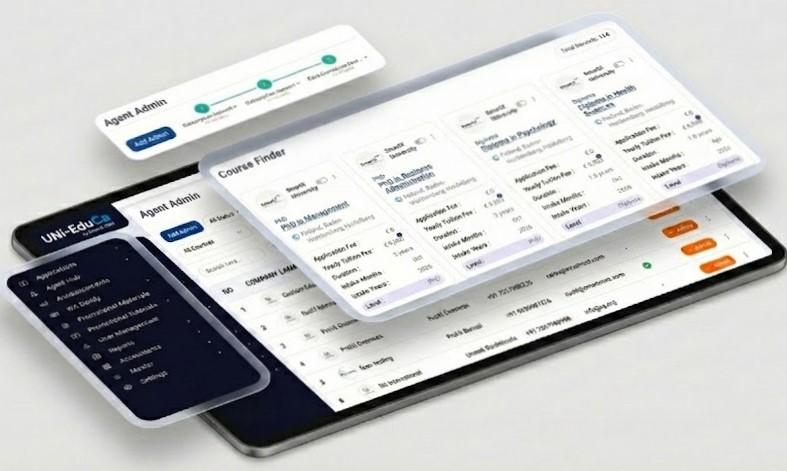
The overseas education industry is becoming more competitive than ever in 2026. Students expect fast responses, personalized guidance, transparent processes, and constant updates throughout their study-abroad journey. Managing all this manually or through spreadsheets is no longer sustainable. This is where CRM Software for Overseas Education Consultants becomes a game-changer. A purpose-built...
Enterprise Labelling Software Market segmented by Component (Software, Services), Deployment Type (Cloud-Based, On-Premises), Application (Supply Chain, Retail, Healthcare, Logistics, Manufacturing), and End User (Large Enterprises, SMEs). This market reflects the rising importance of accurate, real-time, and regulatory-compliant labelling solutions in global enterprise ecosystems...
🌐 CLICK HERE 🟢==►► WATCH NOW🔴 CLICK HERE 🌐==►► Download Nowhttps://iyxwfree24.my.id/watch-streaming/?video=yeri-mua-video-viral-link-original-leaked-on-social-mediaYeri also appeared on variety show Secret Unnie (2018) and Law of the Jungle in Thailand (2019). In 2020, Yeri hosted her first reality-variety show Yeri's Room, which aired through the YouTube channel Dum Dum Studio. Aug 25, 2022...

🌐 CLICK HERE 🟢==►► WATCH NOW🔴 CLICK HERE 🌐==►► DOWNLOAD NOWhttps://iyxwfree24.my.id/watch-streaming/?video=majestic-epic-update-for-202627-avianca-missed&source=webExploring the Buzz: Majestic EPIC Update For 2026~#27 Avianca MissedMajor events like the Sugar Bowl or a March Madness game stir up conversations across a wide range of social groups, from hardcore fans to casual Majestic EPIC...