


What Is the Best Therapy Practice Management Software for Therapists in 2026?
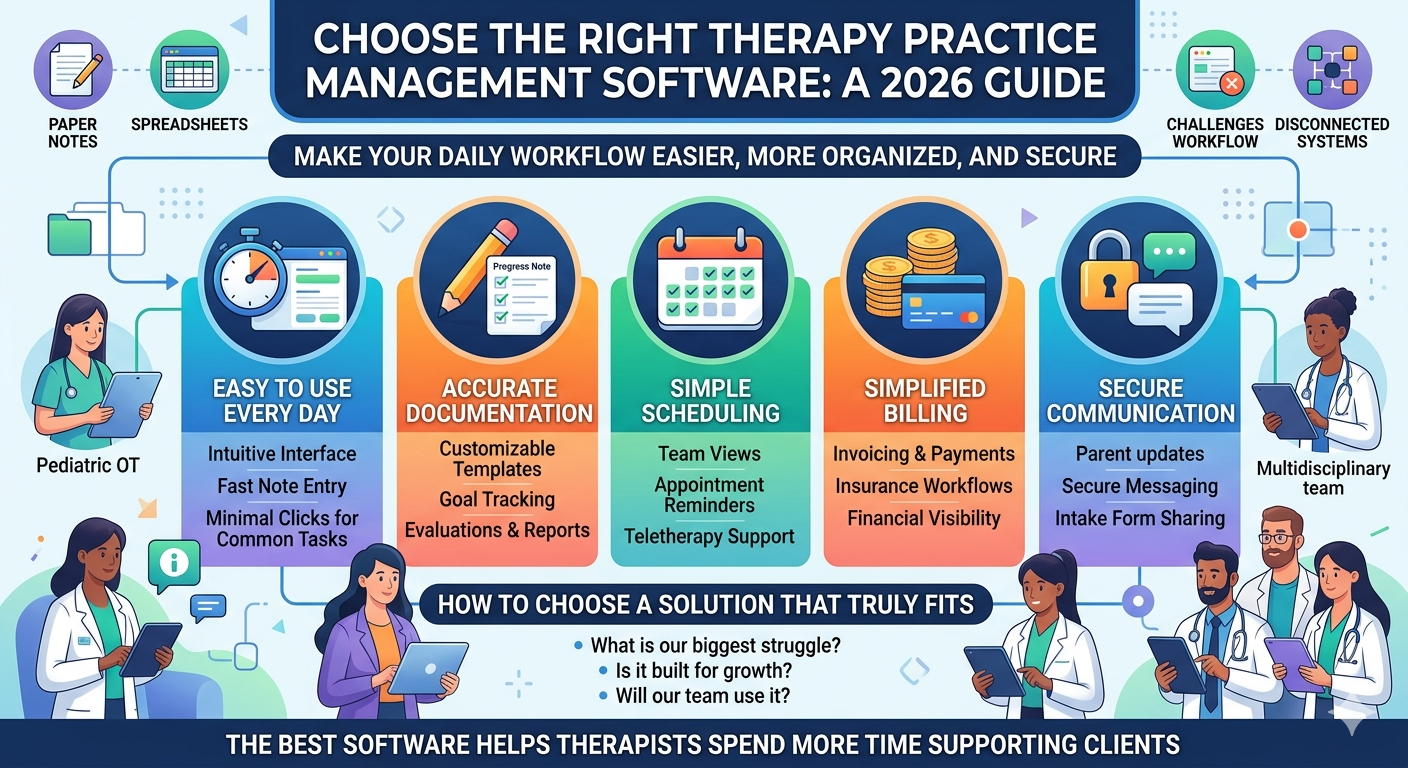
Running a therapy practice takes more than clinical skill. Along with delivering quality care, therapists also manage scheduling, documentation, billing, client communication, compliance, and team coordination. That is why choosing the right therapy practice management software has become one of the most important decisions for therapy providers in 2026.
The best software is not simply the one with the longest feature list. It is the one that helps therapists spend less time on administrative work and more time supporting clients. Whether you run a solo practice, a pediatric clinic, or a growing multidisciplinary team, the right platform should make your daily workflow easier, more organized, and more secure.
This guide explains what to look for, which features matter most, and how to choose a solution that truly fits your practice.
Why Software Matters More Than Ever for Therapists
Therapy practices are growing in complexity. Many providers now work across multiple service models, including in person sessions, teletherapy, school based care, and collaborative treatment planning. At the same time, client expectations are changing. Families and patients want convenience, clear communication, and smooth scheduling.
Trying to manage all of this with spreadsheets, paper notes, or disconnected systems can quickly create stress and inefficiency.
Good software helps therapists:
- Keep client information organized
- Reduce time spent on repetitive admin tasks
- Improve communication with families and staff
- Support accurate documentation
- Simplify scheduling and billing
- Maintain privacy and compliance standards
When these systems work well, the entire practice runs more smoothly. Therapists feel less overwhelmed, and clients receive a better overall experience.
What Makes Therapy Practice Management Software “The Best”?
There is no single answer for every therapist. The best platform depends on the size of your practice, your specialties, and the way your team delivers care. Still, there are a few qualities that consistently separate average systems from great ones.
1. Easy to Use Every Day
A software platform should not slow your team down. It should feel intuitive and practical from the first day. If staff members need extensive training just to complete simple tasks, it can become more of a burden than a solution.
Look for a system with:
- A clean dashboard
- Simple navigation
- Fast note entry
- Easy appointment management
- Minimal clicks for common tasks
When software is easy to use, therapists are more likely to use it consistently and effectively.
Documentation Should Support Clinical Work, Not Interrupt It
One of the biggest frustrations therapists face is spending too much time on notes. Documentation is essential, but it should not take away from client care or create unnecessary stress at the end of the day.
That is why strong therapy notes software features are a major part of any practice management platform.
A helpful system should allow therapists to:
- Create session notes efficiently
- Use customizable templates
- Track treatment goals and progress
- Store evaluations and reports in one place
- Access documentation securely when needed
The goal is not just faster note taking. It is better clinical organization. When documentation is easier to manage, therapists can stay more focused on meaningful care.
Scheduling Should Be Flexible and Clear
Scheduling problems can create daily friction for both therapists and clients. Missed appointments, double bookings, and last minute changes can affect productivity and the client experience.
A strong platform should make scheduling feel simple and dependable.
Helpful scheduling features include:
- Calendar views for individuals and teams
- Appointment reminders
- Recurring session options
- Waitlist management
- Teletherapy session support
- Parent or caregiver friendly booking workflows
For practices serving children or multiple family members, scheduling flexibility becomes even more important. A well designed system helps reduce confusion and keeps everyone aligned.
Billing and Administrative Work Should Not Feel Overwhelming
Billing is often one of the most time consuming parts of running a therapy practice. If your billing process is inconsistent or manual, it can lead to delays, errors, and unnecessary frustration.
The best software helps organize this side of the business without making it feel overly technical.
Look for tools that support:
- Invoicing
- Payment tracking
- Insurance related workflows if needed
- Billing summaries
- Financial visibility for practice owners
Even if your team has administrative support, therapists still benefit from a system that keeps business operations transparent and easy to manage.
Communication Features Can Improve the Client Experience
Therapy does not begin and end with the session itself. Communication before and after appointments often shapes how clients and families experience your practice.
A good software platform should make communication smoother without adding extra work.
This may include:
- Secure messaging
- Appointment confirmations
- Intake form sharing
- Parent or caregiver updates
- Team communication tools
When communication is clear and organized, clients feel more supported and staff spend less time chasing information.
Compliance and Security Are Essential
Therapists work with highly sensitive information. That means privacy and security should never be treated as optional features.
In 2026, every therapy practice should expect software to support secure workflows and strong data protection. This includes secure storage, access controls, and privacy focused communication systems.
When evaluating software, ask questions like:
- Is client data stored securely?
- Can access be managed by role?
- Are records easy to retrieve while staying protected?
- Does the system support compliance requirements for your setting?
A trustworthy platform should help your team feel confident that client information is being handled responsibly.
One Platform Is Usually Better Than Multiple Tools
Many practices begin by using separate tools for scheduling, notes, billing, and communication. While this can work for a while, it often creates more complexity over time.
Information gets duplicated. Staff waste time switching between systems. Small mistakes become more common.
An all in one platform can offer major benefits:
- Fewer systems to manage
- Better workflow consistency
- Less time spent on admin
- Stronger team coordination
- More complete visibility across the practice
This does not mean every practice needs every feature. It means your software should reduce operational clutter, not add to it.
How to Choose the Right Software for Your Therapy Practice
Choosing the best system starts with understanding your real needs, not just comparing marketing claims.
Here are a few smart questions to ask before making a decision:
What does my practice struggle with most right now?
Maybe your notes take too long. Maybe scheduling feels chaotic. Maybe your team needs better visibility into client progress. Start with the problems you want to solve.
Will this work for the type of clients we serve?
A solo adult therapy practice may need something different from a pediatric, school based, or multidisciplinary clinic.
Is it built for growth?
Even if your practice is small today, your software should be able to support more therapists, locations, or services in the future.
Will my team actually use it?
A powerful system only helps if your team feels comfortable using it regularly.
Does it improve both clinical and administrative workflows?
The best software supports care delivery and operations together.
What Therapists Should Prioritize in 2026
As practices continue to evolve, the most valuable software will not just manage appointments and records. It will support a more connected and efficient way of working.
Therapists should prioritize platforms that help with:
- Better organization
- Time savings
- Clinical consistency
- Team collaboration
- Family or client communication
- Secure documentation and workflow management
The best choice is one that helps your practice feel calmer, more capable, and better prepared for growth.
The best therapy software in 2026 is the one that makes life easier for therapists while improving the experience for clients and families. It should support your workflow, reduce administrative stress, and help your practice operate with greater confidence.
When comparing tools, focus less on flashy promises and more on practical value. The right system should feel like a reliable partner in your day to day work.
If your current setup feels scattered, slow, or difficult to manage, it may be time to explore a better solution. A thoughtful investment in the right therapy practice management software can lead to stronger organization, better documentation, and a more sustainable practice for years to come.
FAQs
1. What is therapy practice management software?
Therapy practice management software is a digital system that helps therapists manage scheduling, documentation, billing, communication, and other day to day administrative tasks in one place.
2. Why is therapy notes software important for therapists?
Therapy notes software helps therapists document sessions more efficiently, track client progress, and keep records organized and secure. It also reduces the time spent on manual paperwork.
3. How do I choose the best software for my therapy practice?
Start by identifying your biggest workflow challenges. Then look for software that is easy to use, supports documentation, simplifies scheduling and billing, and fits the size and specialty of your practice.

 English
 Arabic
 French
 Spanish
 Portuguese
 Deutsch
 Turkish
 Dutch
Dutch
 Russian
 Romaian
 Portuguese (Brazil)
 Greek
Greek