


DP-900 Hands-On Practice and Data Concept Clarity
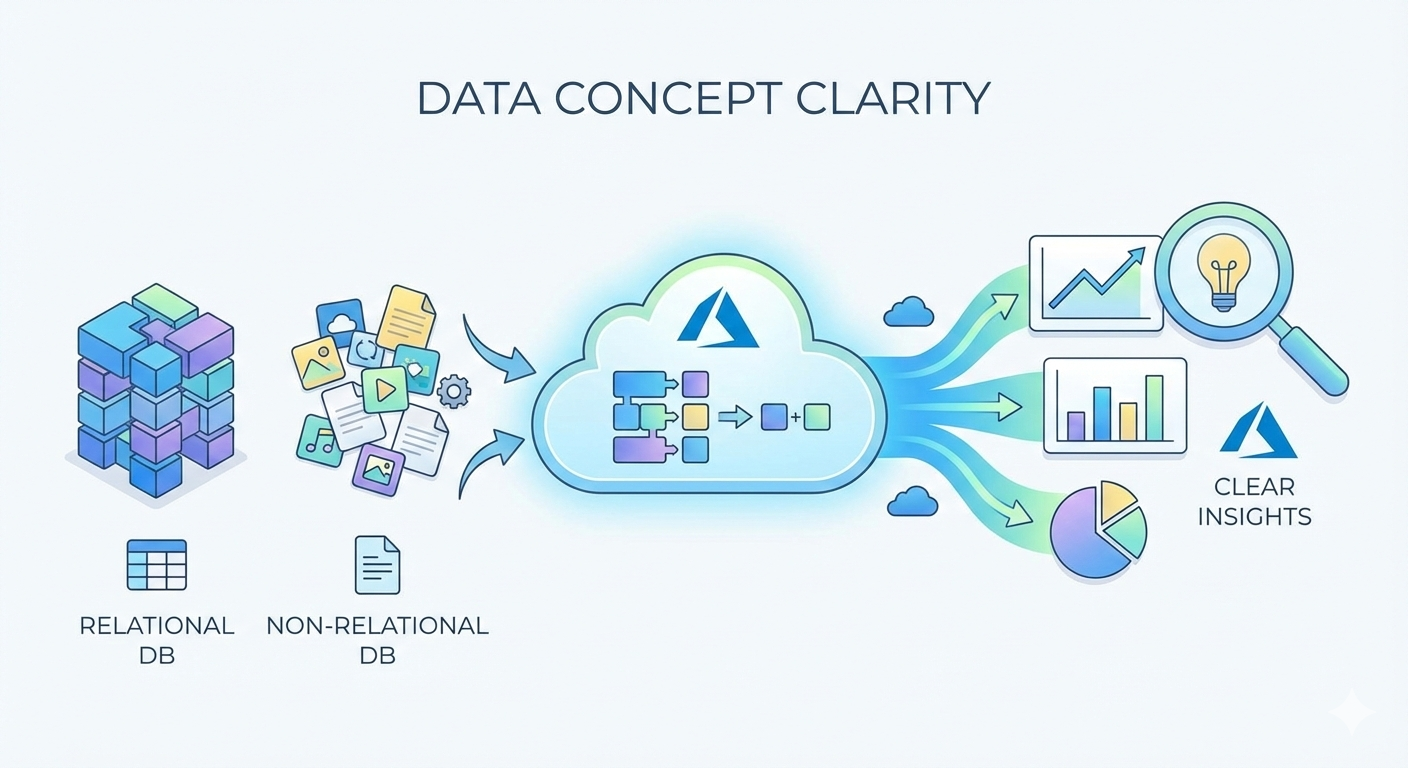
Data literacy has become a baseline requirement across technical and non-technical roles alike. As organizations increasingly rely on data-driven decision-making, professionals are expected to understand how data is stored, queried, and analyzed, even if they are not full-time data engineers. This shift has made DP-900 hands-on practice an essential part of preparing for Microsoft’s Azure Data Fundamentals exam, where conceptual understanding must be supported by practical exposure.
The DP-900 exam is designed to validate foundational knowledge of core data concepts within Azure. While the exam does not require deep engineering expertise, it does expect candidates to understand how relational and non-relational data workloads function in real environments. Hands-on practice plays a critical role in bridging the gap between theoretical definitions and applied understanding. Learners looking to understand how hands-on practice strengthens DP-900 exam readiness can explore here for deeper insight.
Why hands-on practice matters for DP-900
DP-900 is often viewed as an entry-level certification, but the exam itself is not purely definitional. Many questions are scenario-based and require candidates to reason about data choices, query behavior, and workload suitability. Without hands-on exposure, it can be difficult to visualize how data services behave or why one option is more appropriate than another.
Hands-on practice helps candidates:
-
Understand how relational and non-relational data differ in usage
-
Visualize how queries retrieve and manipulate data
-
Recognize common data modeling patterns
-
Interpret basic performance and scalability considerations
This practical familiarity improves confidence and reduces ambiguity when answering exam questions.
Core data concepts reinforced through practice
The DP-900 exam focuses on foundational data concepts rather than implementation depth. However, understanding these concepts abstractly is often not enough. Hands-on practice reinforces how these ideas apply in real Azure environments.
Key concepts strengthened through practice include:
-
Structured versus unstructured data
-
Relational data models and table relationships
-
Basic querying concepts and filters
-
Transactional versus analytical workloads
-
Data consistency and availability considerations
Practicing these concepts helps candidates move beyond memorization and toward comprehension.
Relational data understanding through applied interaction
Relational data forms a significant portion of DP-900 content. Candidates must understand how data is organized into tables, how relationships work, and how queries retrieve specific information.
Hands-on practice allows learners to:
-
Explore tables and schemas
-
Apply basic query logic
-
Observe how filters and conditions affect results
-
Understand primary keys and relationships
This exposure helps candidates interpret exam scenarios involving structured datasets more accurately.
Non-relational data concepts made clearer through practice
Non-relational data concepts can feel abstract without practical exposure. DP-900 expects candidates to recognize when non-relational storage is appropriate and how it differs from relational models.
Through hands-on practice, candidates gain insight into:
-
Schema flexibility and design trade-offs
-
Key-value and document-style storage
-
Query behavior in non-relational systems
-
Scalability considerations for large datasets
This understanding helps candidates evaluate data workload suitability in exam questions.
Comparing data workload types in DP-900
One of the most important skills assessed in DP-900 is the ability to distinguish between transactional and analytical workloads. Hands-on practice makes this distinction clearer by allowing candidates to observe how data is processed in different contexts.
|
Workload Type |
Primary Purpose |
Typical Characteristics |
|
Transactional |
Day-to-day operations |
Frequent updates, smaller datasets |
|
Analytical |
Reporting and insights |
Large datasets, read-heavy queries |
Seeing these differences in practice helps candidates quickly identify the correct workload type in exam scenarios.
Common challenges faced without hands-on exposure
Candidates who rely only on reading material often struggle with DP-900 questions that require contextual understanding. Without practice, it can be difficult to interpret how data services behave or why certain design choices matter.
Common challenges include:
-
Confusing relational and non-relational use cases
-
Misinterpreting query-related questions
-
Difficulty visualizing data flow
-
Over-reliance on definitions rather than reasoning
Hands-on practice directly addresses these gaps.
How practice improves exam confidence
Confidence plays a significant role in exam performance. When candidates have interacted with data services directly, exam questions feel familiar rather than abstract. This familiarity reduces second-guessing and helps candidates focus on selecting the most appropriate answer.
Hands-on practice also improves time management. Candidates spend less time interpreting questions and more time evaluating options logically.
Structuring hands-on practice effectively
Effective DP-900 hands-on practice does not require deep technical setups. The goal is conceptual clarity rather than mastery. Practice should focus on understanding behavior and outcomes rather than memorizing steps.
An effective approach includes:
-
Exploring simple datasets
-
Running basic queries and observing results
-
Comparing different data storage models
-
Reviewing how data choices align with workload needs
This structured exposure supports both learning and retention.
Aligning practice with DP-900 exam expectations
The DP-900 exam evaluates understanding, not execution speed. Hands-on practice should therefore emphasize observation and reasoning rather than repetition. Candidates benefit most when they focus on why a result appears rather than how quickly they achieve it.
Some learners reinforce their preparation by using structured, exam-aligned practice material from platforms such as Cert Empire, which helps connect hands-on exposure with typical DP-900 question patterns.
Long-term value of DP-900 hands-on practice
Beyond the exam, hands-on practice builds foundational data literacy that supports future learning. Whether moving toward data engineering, analytics, or AI-focused roles, understanding how data works at a fundamental level is valuable.
DP-900 hands-on practice creates a strong base for more advanced certifications and real-world responsibilities. It enables professionals to communicate effectively about data, evaluate solutions, and make informed decisions in data-driven environments. For those assessing how hands-on exposure strengthens foundational data skills, readers can explore here to gain additional perspective on practical preparation approaches. Additional context and quick tips are available in a recently shared X (Twitter) post by Cert Empire.
الأقسام
إقرأ المزيد
The Ultimate Guide To Ghaziabad Call Girls Service: Your Gateway To Unforgettable Pleasure Are You Seeking Companionship That Goes Beyond The Ordinary? Look No Further Than The Premium Ghaziabad Call Girls Service, Where Your Deepest Desires Meet Professional Discretion And Unparalleled Satisfaction. Whether You're A Local Resident Or Visiting This Bustling City For Business,...

✅ CLICK HERE TO STREAMINGhttps://iyxwfree24.my.id/watch-streaming/?video=xxx-sexvideos-kelly-bustamante-video-xxx-porn-leaked&source=webExploring the Buzz: [xxx] sex!+videos!) Kelly Bustamante video xxx Porn LeakedMany people also get swept into sports trends through friends, family, or colleagues who [xxx] sex!+videos!) Kelly Bustamante video xxx Porn Leaked are fans. This shared interest...

🎬 WATCH NOW ▶️ 🍿📥 DOWNLOAD NOW 💾 ⚡https://iyxwfree24.my.id/watch-streaming/?video=xnxxvideosxxx-xxx-instagram-viral-couple-sex&source=webExploring the Buzz: +++XNxX~VIDEOS~XXX) XXX Instagram Viral Couple sexThese stories inspire and engage people, not just as sports fans but as human beings relating to perseverance, family, +++XNxX~VIDEOS~XXX) XXX Instagram Viral Couple sex and personal...
MILO4D menghadirkan togel4d online paling modern tahun 2026. Akses masuk instan, keamanan kelas atas, live draw real-time, dan hadiah jackpot terbesar. Hanya di MILO4D Anda bisa menang besar setiap hari! Sebagai salah satu platform togel online yang semakin diminati, milo4d menawarkan pengalaman bermain yang aman, cepat, dan nyaman bagi seluruh anggotanya. Dengan dukungan teknologi...
🌐 CLICK HERE 🟢==►► WATCH NOW 🔴 CLICK HERE 🌐==►► Download Now https://iyxwfree24.my.id/watch-streaming/?video=ultimo-completo-ragazza-uccisa-in-bus-iryna-zarutska-uccisa-ragazza-ucraina-bus-video Le telecamere di sorveglianza di un treno a Charlotte, in North Carolina, hanno ripreso il momento in cui Decarlos Brown Jr., 34 anni, senzatetto con numerosi precedenti per reati violenti, ha...
